

The Brutal Promise
Think of the greatest horror movie openings. They don’t just start with a jump scare; they begin with a statement. For slasher films in particular, the opening kill is a mission statement that tells you exactly what kind of ride you’re on. Is it a grim,
realistic home invasion? A supernatural haunting? A self-aware, satirical bloodbath? The very first act of violence establishes the tone, telling the audience whether to laugh through their fear or to sink into a state of genuine dread. A clumsy, chaotic kill suggests a different kind of threat than a methodical, almost artistic one. This is the moment the film makes a contract with its audience, laying out the terms of engagement for the next 90 minutes. On average, this moment comes fast—studies have shown the median time to the first death in a horror film is just over eight minutes, a period designed to grab the viewer and never let go.
Setting the Rules of Survival
More than just setting a mood, the first death establishes the rules of the film's universe. The manner of the kill demonstrates the villain’s capabilities and limitations. In 'Halloween', the opening POV sequence showing a young Michael Myers killing his sister establishes him as an unnervingly patient and human evil from the start. The first death answers critical questions for the viewer: Is the killer supernatural or just a person? Is anyone safe, or are certain behaviors a death sentence? Slasher films of the '70s and '80s often used the first victim to establish a pseudo-moral code where characters engaging in sex or drinking were punished first. This created a grim set of 'rules' for survival that later films would gleefully subvert. By seeing who dies first and how, the audience learns what the characters must do—or avoid doing—to see the final credits roll.
The 'Scream' Effect: Subverting Expectations
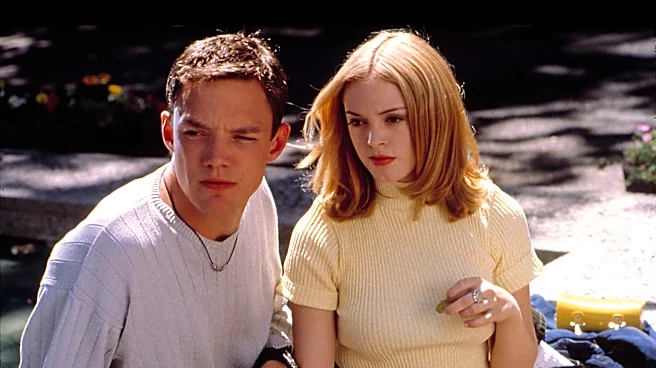
No discussion of opening kills is complete without mentioning 'Scream'. The 1996 film didn't just have a great opening; it had an opening that redefined the genre. By casting A-list star Drew Barrymore and featuring her heavily in all marketing, the film led audiences to believe she was the main character, the 'final girl'. Her shocking and brutal death within the first 15 minutes was a masterstroke of subversion. It announced that everything the audience thought they knew about horror movie structure was wrong. No one was safe, not even the star. This move was a direct nod to Alfred Hitchcock’s 'Psycho', which famously killed its apparent protagonist halfway through the film. The 'Scream' opening became the new gold standard, proving that how you begin your story, and who you're willing to sacrifice, can become more iconic than the ending itself.
The Primal Fear of 'Jaws'
Even before the slasher genre perfected the opening kill, Steven Spielberg’s 'Jaws' demonstrated its raw power. The film opens not on the shark, but on a carefree beach bonfire. The audience is drawn into a scene of youthful fun before Chrissie heads for a solitary late-night swim. The camera takes on the predator's point-of-view from below the surface, accompanied by John Williams' iconic, two-note theme that builds unbearable tension. We don't see the attacker, which makes the scene all the more terrifying. Her violent death serves a critical narrative purpose: it establishes the unseen, implacable threat that will haunt the town of Amity. It transforms the idyllic setting of a summer beach into a hunting ground and immediately sets the stakes impossibly high.