





More Than a Game
To understand the electric atmosphere inside Mexico City's Estadio Azteca on June 22, 1986, you have to look beyond the field. Just four years earlier, the United Kingdom and Argentina had fought the Falklands War. The conflict, which resulted in hundreds
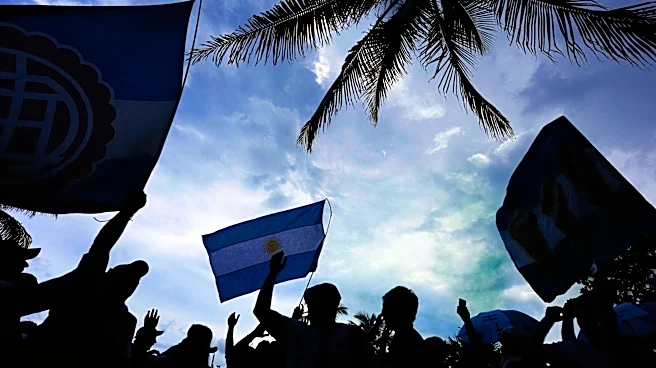
of deaths, left a deep, open wound, particularly in Argentina. While players on both sides publicly stated that politics had no place in the match, the 114,580 spectators knew better. This wasn't just a contest for a spot in the World Cup semi-finals; for many Argentinians, it was a chance for a symbolic revenge, a proxy battle played out on grass. The air was thick with a tension that no ordinary sporting event could produce.
The Hand of God
The first half was tight and scoreless. Then, six minutes into the second half, came a moment of pure, unadulterated controversy. Argentina’s captain, the brilliant but volatile Diego Maradona, surged toward the English goal. As a mis-hit clearance looped into the penalty area, Maradona, all 5-foot-5 of him, leaped into the air against the much taller English goalkeeper, Peter Shilton. Suddenly, the ball was in the back of the net. The Argentinians celebrated wildly while the English players furiously protested, claiming Maradona had used his hand. The Tunisian referee, Ali Bin Nasser, saw nothing wrong and awarded the goal. Maradona later cheekily described it as being scored "a little with the head of Maradona and a little with the hand of God." The name stuck, immortalizing an act of supreme cunning and gamesmanship.
The Goal of the Century
If the first goal was diabolical, the second was divine. Just four minutes after the “Hand of God,” Maradona produced a moment that is widely considered the greatest individual goal in soccer history. Receiving the ball in his own half, he embarked on a 60-yard, 10-second dash. He pirouetted, slalomed, and sprinted past five different English players, leaving them in his wake like statues. Reaching the penalty box, he feinted around the lunging Shilton and calmly slotted the ball into the empty net. In the span of four minutes, Maradona had showcased both sides of his footballing persona: the cheater and the genius. It was an astonishing display that silenced any argument about his talent.
A Legacy in Two Goals
England managed to pull a goal back through Gary Lineker, who would go on to win the tournament's Golden Boot as top scorer, but Argentina held on for a 2-1 victory. They would eventually lift the World Cup trophy, with Maradona rightfully named the player of the tournament. But the quarter-final against England became the defining chapter of their triumph. In Argentina, the victory was celebrated as a historic moment of national vindication. In England, the loss left a lasting sense of injustice, forever linked to Maradona's handball. The two goals perfectly captured the essence of the match: one steeped in controversy, the other in pure, unassailable brilliance.