




Why Is This Happening?
In the knockout stages of the Men's Soccer Cup, there are no ties. A winner must advance. If the score is level after 90 minutes of regulation, the game goes into a 30-minute extra time period. If the teams are still deadlocked after that, they turn to the penalty
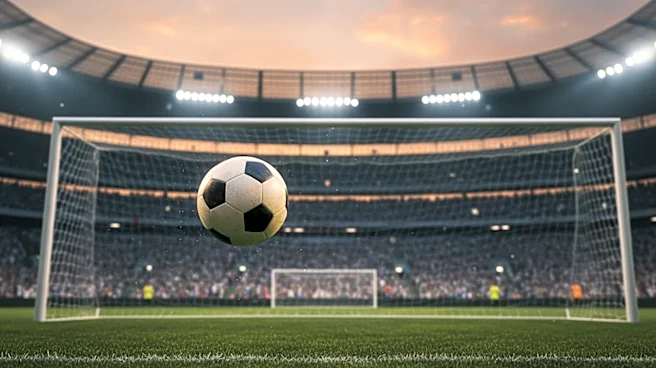
shootout to decide a winner. It’s the soccer equivalent of moving from a team sport to a sudden, high-stakes series of individual duels. Think of it less as overtime and more as a completely new game, a test of pure nerve from just 12 yards away.
The Rules of the Duel
The mechanics are straightforward on the surface. The referee flips a coin to decide which goal to use and which team shoots first. Each team selects five players to take one kick apiece, alternating turns. Only players who were on the field at the end of extra time are eligible to kick. The team that scores the most goals out of five wins. If one team builds an insurmountable lead—for example, going up 3-0 with only two kicks left for the opponent—the shootout ends immediately. If it’s still tied after five rounds, it goes to “sudden death.” The teams take one kick each until one scores and the other misses.
It’s All a Mind Game
This is where it gets interesting. Studies have shown that the team kicking first wins about 60% of the time, largely due to the mounting pressure on the team that has to constantly play catch-up. The pressure is very real; a player's success rate is over 90% when kicking to win the game, but it plummets to below 60% when a miss means elimination. Goalkeepers play their own games, waving their arms and dancing on the line to distract the kicker. The ultimate psychological play is the “Panenka,” a cheeky, gently chipped shot down the middle of the goal, gambling that the keeper will dive to one side. It’s named after the Czech player Antonín Panenka, who audaciously won the 1976 European Championship with one.
Legends Made and Broken from the Spot
Shootouts are where legacies are forged and shattered. American fans who watched the 1994 World Cup Final at the Rose Bowl saw Italy’s Roberto Baggio, one of the world's best players, sky his penalty over the crossbar to hand the trophy to Brazil. In 2022, Argentina’s goalkeeper Emiliano Martinez used relentless mind games to disrupt the French kickers, helping Lionel Messi finally capture his first World Cup. And in this very tournament, the world watched in shock as Germany, a nation with a near-perfect shootout record for 50 years, was knocked out by Paraguay from the spot, proving that in a shootout, history offers no protection.
How to Watch It Like a Pro
Now that you know the basics, here’s what to watch for. Who does the coach send out first? Usually a reliable, calm player to set a positive tone. Who is saved for the crucial fifth spot? Often, it's the team's star player, tasked with handling the immense pressure. Watch the kicker’s body language on the long walk from the center circle—are they confident or terrified? Look at the goalkeeper; they must keep at least part of one foot on or in line with the goal line until the ball is kicked. And after a player scores, watch their celebration. Research suggests an intense celebration can intimidate the opponent who has to shoot next, a phenomenon called “emotional contagion.”