

A Land of Wonder and Hazard
For the more than one hundred actors who played the Munchkins, stepping onto the massive, brilliantly colored Munchkinland set at MGM felt like entering another world. Jerry Maren, who famously handed Dorothy the lollipop as part of the Lollipop Guild,
recalled his awe at the sheer scale of the production, thinking, "This must be important." This sentiment—that something momentous was underway—was a common thread among those who worked on the film. They were creating a world unlike any seen before, filmed in glorious Technicolor that made every detail pop. From the hand-painted backdrops to the vibrant costumes, the craftsmanship was a source of immense pride and wonder. But that sense of creating something special was constantly tested by the perilous reality of early Hollywood filmmaking, where spectacle often trumped safety.
The Price of Silver and Green
The film's production is infamous for the physical toll it took on its cast. Buddy Ebsen, originally cast as the Tin Man, was hospitalized just over a week into filming. His silver makeup was made of pure aluminum dust, which he inhaled daily. The toxic metal coated his lungs, leaving him unable to breathe. He was forced to drop out of the role, though his voice can still be heard in the group recording of "We're Off to See the Wizard." Jack Haley took over the part, and the makeup was changed to a safer paste, but even he suffered a severe eye infection from it. The Wicked Witch of the West, Margaret Hamilton, endured her own nightmare. During her fiery disappearance from Munchkinland, a delay in a trapdoor mechanism engulfed her in flames. Her copper-based green makeup was flammable, and she suffered second and third-degree burns on her face and hands, forcing a six-week recovery. Upon her return, she famously declared, "I will return to work on one condition—no more fireworks!"
When Dangers Weren't an Illusion
Hamilton’s injuries were not isolated incidents. In a later scene, her stunt double, Betty Danko, was severely injured when the pipe on her prop broomstick, designed to smoke, exploded. Even the magical elements we take for granted had a dark side. The beautiful, glistening snow in the poppy field scene was actually 100% industrial-grade chrysotile asbestos, a material encouraged for its realistic appearance in Christmas scenes at the time. The famous horses of a different color in the Emerald City were coated in Jell-O powder, which they constantly tried to lick off under the hot studio lights. Through it all—director changes, script rewrites, and daily physical hardships—the core cast, including Judy Garland, Ray Bolger, Jack Haley, and Bert Lahr, bonded, determined to see the project through. A recent interview with Priscilla Montgomery, who was a child performer on the film, recalled Hamilton’s kindness; just before her accident, Hamilton had knelt down to reassure the children on set that her scary entrance was “only pretend.”
From Film Set to Cultural Legend
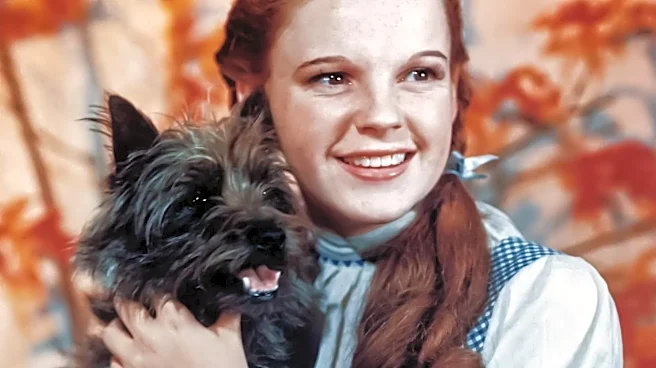
Despite the conviction that they were making something special, 'The Wizard of Oz' was not an immediate, runaway smash hit. It was well-received but failed to recoup its massive budget on its initial run. Its journey to becoming one of the most beloved films of all time was a slow burn, fueled by annual television broadcasts that began in the 1950s. These broadcasts introduced entire new generations to Dorothy’s journey, cementing the film's place in the cultural lexicon. The trials of its creation faded into Hollywood lore, while the magic on screen became immortal. That on-set feeling—the sense of being part of something bigger than themselves—was ultimately validated. The cast and crew, who endured so much, had indeed created something truly special, a timeless masterpiece whose legacy has far outlived the pain of its production.