





First, What Was 'The Method'?
Before Olivier provided the counterpoint, there was The Method—an American revolution in acting. Derived from the “system” of Russian actor Konstantin Stanislavski, it was popularized in New York in the mid-20th century. At its heart, it was a quest for psychological
realism. Actors were taught to stop “pretending” and start experiencing the role. The most famous and controversial proponent, Lee Strasberg, taught actors to use “affective memory,” drawing on their own past traumas and powerful emotions to fuel a performance. This “inside-out” approach created a new kind of star in Marlon Brando, James Dean, and others whose raw, mumbling intensity felt startlingly real to audiences accustomed to more polished presentation. But it wasn't a monolith; other teachers like Stella Adler, who also studied with Stanislavski, rejected Strasberg’s focus on personal memory, instead championing the use of imagination to understand a character’s circumstances.
The Olivier Alternative: Outside-In
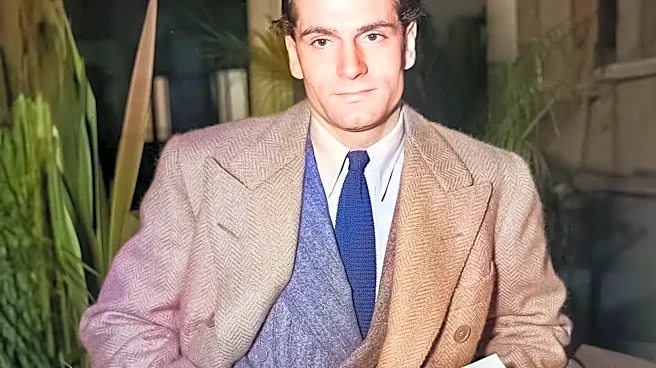
Sir Laurence Olivier was the titan of a different tradition: British classicism. If the Method was “inside-out,” Olivier was the master of “outside-in.” He believed a character started not with a deep dive into an actor's psyche, but with technique and transformation. He would famously start with a physical detail—often a prosthetic nose—and build the character from there, finding the man's walk, his voice, and his posture. Olivier trusted that if he constructed the external shell with enough craft and precision, the character’s internal life would inevitably follow. To him, acting was a craft of immense technical skill, involving rigorous training in voice, movement, and text analysis. When the Method swept through Hollywood, Olivier’s highly controlled, presentational style began to look old-fashioned to some, even superficial.
A Clash of Philosophies
The supposed exchange with Hoffman on Marathon Man perfectly illustrates the philosophical divide. Olivier was reportedly infuriated by what he saw as the self-indulgent and inefficient nature of Method acting, having previously struggled with Marilyn Monroe and her acting coach on the set of The Prince and the Showgirl. While Hoffman himself has since clarified the story was more of a playful joke, it endures because it captures a genuine tension: the technical craftsman versus the emotional purist. To Olivier and his school of thought, pretending to be a character around the clock wasn't just unnecessary; it was a fundamental misunderstanding of what acting was. It was a job of controlled, repeatable artifice, not a 24/7 psychological possession.
The Reshaping: A New Synthesis
Olivier didn't destroy the Method, but his towering example provided a necessary counterbalance. His sustained excellence proved that there was another path to greatness, one that didn't require dredging up personal demons. As the initial fervor around Strasberg's approach cooled, a more integrated philosophy began to take hold in acting schools and conservatories. The conversation shifted. Perhaps an actor didn't have to choose between internal truth and external technique. The new ideal became a performer who could do both: a versatile artist with the vocal and physical command of an Olivier, but who could also access the emotional authenticity championed by the Method. This synthesis acknowledged the limits of both extremes. A purely technical actor could feel hollow, while a purely Method actor could lack range and be difficult to work with. Since the 1980s, this middle ground, blending classical training with Method techniques, has become a mainstream approach to actor training.