



Taming the Human Stampede
The number one fear for any large-scale event producer is a crowd crush. When thousands of people move from one headliner to another, the flow of traffic isn't left to chance. You'll rarely find a straight, wide-open path between two major stages. Instead,
producers use what’s known as “managed circulation.” Pathways are often gently curved to naturally slow people down without creating a bottleneck. Obstacles like art installations, vendor carts, or raised flower beds are strategically placed to break up a massive, rushing herd into smaller, more manageable streams of people. This isn't just about safety; it’s about psychology. A straight shot encourages sprinting, while a winding path invites a stroll, reducing the collective anxiety and aggression of a massive crowd shift.
Designing for the Overwhelmed
A full day at a music festival is a sensory assault. The constant sun, pulsating bass, and sheer number of people can lead to exhaustion, dehydration, and general irritability. Bad vibes are contagious and can lead to everything from medical tent visits to fights. To combat this, producers design “decompression zones.” These are the shaded areas, grassy knolls far from a stage, or dedicated “wellness tents” you see dotted around the grounds. They are intentionally placed and designed to be calming. By creating quiet, low-stimulation environments, festivals give attendees a place to recharge. This isn't just a nice amenity; it's a crucial tool for crowd control. A well-rested, hydrated fan is a happy, compliant fan who is less likely to cause problems for security or medical staff.
Leveraging the Instagram Moment
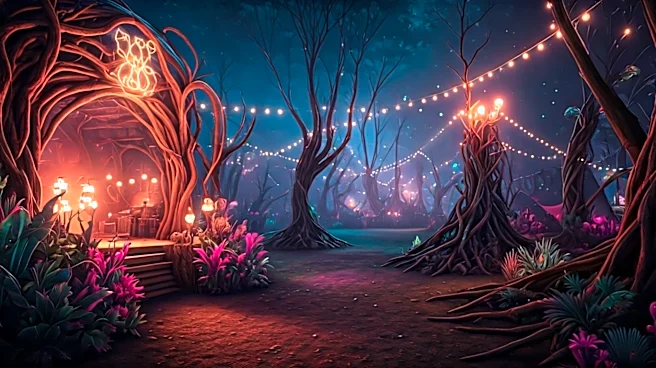
In the age of social media, festival producers know that a fan’s primary goal is often to capture the perfect photo. Rather than fight it, they harness it. Those giant, weird, wonderful art installations—the massive astronaut, the rainbow tower, the glowing flora—are more than just decoration. They are navigational beacons. When you tell your friends, “Meet me at the giant metallic butterfly,” you’re using a landmark that producers spent millions to install for that exact purpose. It’s far more effective than saying “Meet me by the third port-a-potty on the left.” These landmarks, or “wienies” in industry parlance (a term borrowed from Disney Imagineers), draw people into less-trafficked areas of the festival grounds, distribute crowds more evenly, and generate free marketing for the event when they inevitably end up all over Instagram.
The Science of Where You Eat and Pee
The placement of food vendors, bars, and bathrooms is a masterclass in behavioral engineering. You might notice that the most desirable, gourmet food options are often located far away from the main stages. This is intentional. It pulls people away from congested areas, encouraging exploration and dispersing spending. Similarly, bars are often placed in high-traffic corridors to maximize impulse buys, while water stations are plentiful but might require a short walk, again encouraging movement. Bathroom placement is perhaps the most critical. Banks of porta-potties are located to serve major areas without creating a single, massive point of failure. By creating multiple zones for essential services, producers avoid creating catastrophic lines and keep the human machinery of the festival running smoothly, ensuring fans stay on-site longer and happier.