








The Annoyance of the Wandering Belt
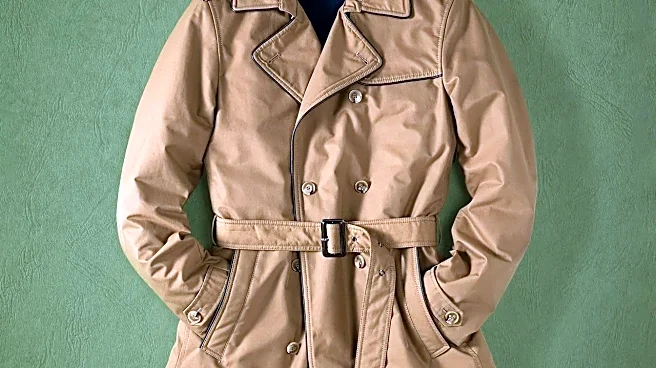
The belted trench or wool coat is a timeless staple of any well-rounded wardrobe, offering a polished silhouette that is both classic and functional. But for all its sartorial power, it comes with a common design flaw: the belt rarely stays put. Whether
you wear your coat open or closed, the sash has a tendency to slide out of its side loops, often dragging on the ground or, in a worst-case scenario, getting lost completely. You might find yourself constantly readjusting, pushing the belt back through the loops, or giving up and stuffing the ends into your pockets for a less-than-ideal look. This minor but persistent irritation can make an otherwise elegant garment feel surprisingly high-maintenance, undermining its effortless appeal.
A Closer Look: The Keeper Loop
Look closely at the side of your coat, near one of the main fabric belt loops. On many well-constructed garments, you'll find a small, discreet secondary loop. Sometimes it's a delicate thread chain; other times it's a small strip of fabric with a button, or even just a sturdier, doubled-up section of the main loop. This is often called a 'belt keeper' or 'prong keeper' loop, and its sole purpose is to secure the belt to the coat, preventing it from ever falling out. It's a thoughtful detail borrowed from traditional tailoring, designed to add function without disrupting the coat's clean lines. While a standard belt loop simply guides the belt, this tiny anchor actively holds it in place, ensuring it's always there when you need it and perfectly centered when you wear the coat open.
How to Use This Hidden Feature
Using the keeper loop is simple once you know what to look for. The exact method depends on the style of your coat's belt and the type of loop it has. If your coat belt has a buckle with a metal prong, the solution is straightforward. After threading the belt through the main loops, simply slide the metal prong through the small keeper loop before buckling it. This anchors the buckle end to the side of the coat. If your coat has a simple sash without a prong, or if the keeper is a buttonable strap, the logic is similar. You can either tie one end of the sash to the loop with a simple knot or, if it has a button feature, secure the strap around the belt itself. The goal is to create a secure connection between the belt and the coat at one of the side loops. This single anchor point is enough to stop the entire belt from slipping out, even when untied.
No Loop? No Problem. Here Are Alternatives
What if your favorite coat doesn't have this clever feature? Don't worry, you're not doomed to a life of dangling belts. You can easily create your own solution. One of the simplest methods is to use a small safety pin, pinned to the inside of the coat's side seam, to discreetly secure the belt. For a more permanent fix, a tailor can add a small thread chain loop in a matter of minutes. If you're handy with a needle and thread, you can even create one yourself using a simple chain stitch with a strong thread that matches your coat. Another popular technique involves tying the belt in a specific way when wearing the coat open. Instead of letting the ends hang, secure them with a neat knot at the back of the coat. This cinches the waist for a flattering shape and keeps the belt from going anywhere.