





The Spectacle of Survival
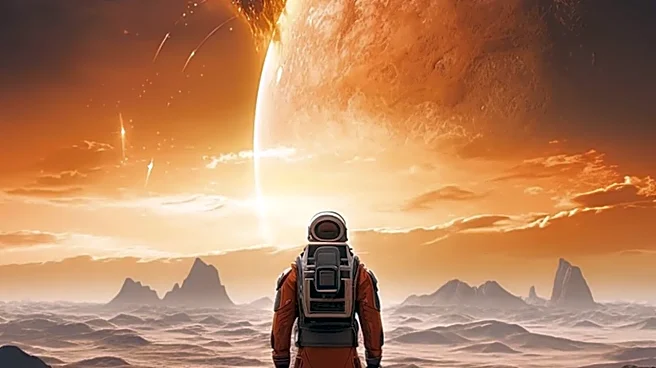
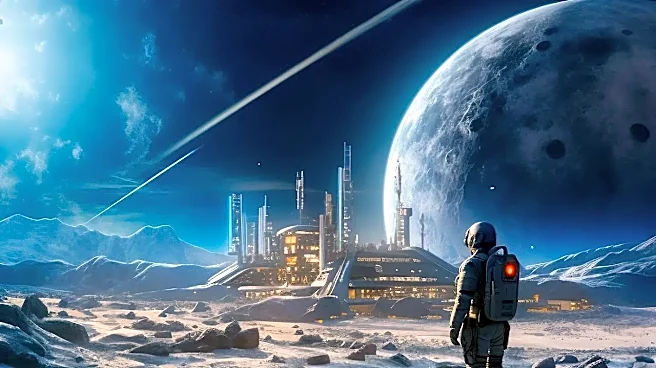
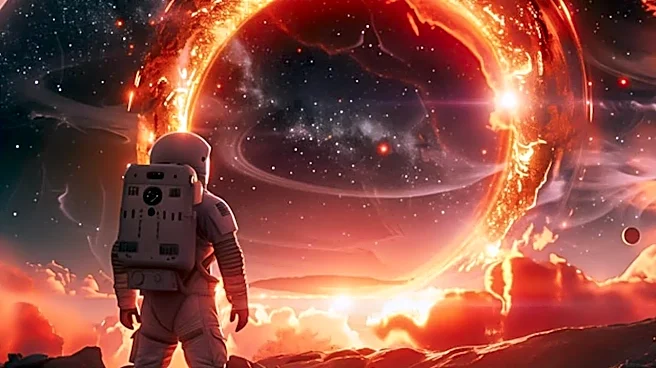
Both stories throw humanity into the deep end of an extinction-level event, but the nature of the spectacle couldn't be more different. Interstellar is a journey of brutalist grandeur. It’s a film defined by overwhelming physics: the crushing gravity
of Miller's planet, the haunting silence of space, and the dizzying, terrifying beauty of the black hole, Gargantua. The spectacle in Nolan’s universe is one of humanity being dwarfed by cosmic forces, a tiny vessel navigating impossibly vast and hostile environments. The visuals are awe-inspiring but carry a constant, underlying threat. It’s the visual language of survival against unforgiving odds, where the universe itself is the antagonist. Project Hail Mary, on the other hand, finds its spectacle in the microscopic and the collaborative. The threat, an alien microbe called Astrophage, is literally eating the sun. The awe comes not from celestial bodies, but from the thrill of scientific problem-solving. While the stakes are just as high, the spectacle is in the process: watching protagonist Ryland Grace puzzle through astrobiology, engineering, and first contact. The eventual friendship with Rocky, an alien engineer from a world facing the same crisis, turns the spectacle inward. It becomes about the wonder of two minds from different corners of the galaxy working together, a ballet of shared data and makeshift communication. It's less about surviving the universe and more about marveling at its intricate, solvable puzzles.
The Calculus of Sacrifice
Sacrifice is the moral engine of Interstellar. Every step forward is paid for with a pound of flesh. Cooper sacrifices his life with his children for a chance to save them, a wound that festers across decades due to time dilation. The crew makes constant, agonizing choices, leaving people behind and gambling lives on incomplete data. The film frames sacrifice as a painful, necessary transaction for humanity's future. This is most powerfully contrasted in the actions of Cooper, who repeatedly gives up his own chances of survival for the good of the mission, and Dr. Mann, who sacrifices the entire mission for his own survival. In Interstellar, sacrifice is a heavy, solemn duty, often intertwined with loss and betrayal.
Project Hail Mary presents a different, and perhaps more complex, form of sacrifice. Ryland Grace doesn't initially choose his mission; he's a science teacher forced into a suicide mission after the prime candidates die. His sacrifice is one of agency, memory, and identity. He wakes up with amnesia, having been stripped of his own past to ensure he completes his task. The ultimate sacrifice in the book isn't about dying for humanity, but choosing to save another species at the cost of ever returning home. It’s a choice born not of grim duty, but of profound friendship and a sense of shared existence. It reframes sacrifice not as a payment for survival, but as a gift offered in the spirit of cosmic camaraderie.
Two Flavors of Scientific Hope
Ultimately, the two stories diverge most in their definition of hope. Interstellar's hope is hard-won and deeply serious. It’s the hope of endurance. The film suggests that humanity's salvation lies in our ability to push through unimaginable pain and loss, guided by the enduring power of love—specifically, the bond between a father and daughter. Science is the tool, but the fuel is a gritty, almost desperate will to survive for the sake of the next generation. The ending, where humanity lives on in giant space cylinders, feels less like a triumphant victory and more like a weary, qualified success. We survived, but the cost was immense.
Project Hail Mary, soon to be a film starring Ryan Gosling, offers a more joyful and optimistic vision. Its hope is rooted in curiosity, collaboration, and the sheer thrill of discovery. Where Interstellar finds humanity alone in the dark, Project Hail Mary finds a friend. The message isn't just that we can solve our problems with science, but that the universe is a place of wonder, and we aren't isolated in it. The solution to Earth's crisis comes from an unexpected alliance, suggesting that our greatest hope may lie in what—and who—we have yet to discover. It’s a story that champions the scientific method as an engine of connection, making it one of the most purely optimistic sci-fi tales in recent memory.