


Anatomy of an Awards Show Meme
For decades, the Emmy Awards were a fairly straightforward affair: television’s biggest stars gathered to hand each other trophies in a broadcast that millions watched but few truly dissected. Today, that broadcast is just the raw material. The real show
happens on social media, where a massive, decentralized content machine churns out memes in real time. These aren't just jokes; they're cultural artifacts that determine what moments from the three-hour-plus ceremony actually stick. A winning speech can be forgotten in minutes, but a celebrity's bewildered reaction shot can live forever as a universal GIF for confusion. The 'meme effect' is a phenomenon where the audience, armed with screenshot tools and wit, becomes the ultimate arbiter of an event's legacy. Each year, the internet waits for those unscripted, human moments—the odd fashion choice, the rambling speech, the failed comedic bit—that can be ripped from their original context and repurposed for endless digital scenarios.
Exhibit A: The Standing Ovation for a Technical Glitch
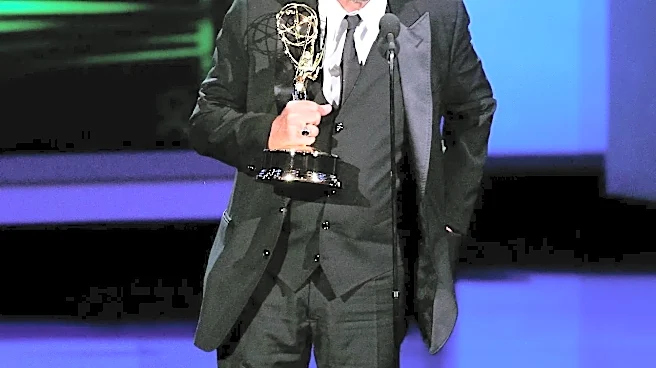
This year's most talked-about moment wasn't a shocking win, but a technical failure. When beloved veteran Gregory Finch finally won his first Emmy for the dark drama "Pluribus," he approached the microphone with tears in his eyes. He began his speech, but no sound came out. As he frantically tapped the mic and gestured to the audio techs, the audience, thinking it was a comedic bit, rose to their feet in a wave of supportive applause. The internet immediately seized on the image of Finch, mute and panicked, surrounded by a cluelessly cheering crowd. Within an hour, it became the definitive meme for every 'senior leadership celebrating a project they don't understand' Slack message and the go-to GIF for anyone feeling unheard in a Zoom meeting. The meme had nothing to do with Finch’s incredible performance in the show, but everything to do with a relatable moment of public frustration.
Exhibit B: The Unscripted Silence
Another breakout moment came from presenters Anya Sharma and Leo Vance, co-stars of the cerebral sci-fi hit "The Pitt." Known for their sharp on-screen banter, their teleprompter allegedly froze mid-sentence. Instead of panicking, the two simply stood in dead silence, staring blankly at each other for a full seven seconds before Vance dryly commented, "Well, this is dramatic." That painfully long, unscripted pause became an instant reaction meme. It was clipped and posted with captions like, "My two remaining brain cells trying to form a sentence on Monday morning" and "The vibe when you and your work bestie are the only ones who know the meeting is pointless." The moment perfectly captured a shared sense of professional awkwardness, making it far more memorable than the award they were there to present.
Why the Emmys Secretly Need the Memes
While producers might cringe at unscripted moments that derail their carefully planned show, the meme effect has become essential to the Emmys' survival. In an age of dwindling live viewership for traditional television, these viral moments are the show's bridge to a younger, more online audience. Many people who will never watch the full broadcast will see and share the memes, giving the Emmys a cultural footprint far beyond its Nielsen ratings. This digital afterlife serves as free, incredibly effective marketing, reminding the world that the Emmys, despite their formal trappings, can still generate spontaneous, hilarious, and deeply human moments. The memes ensure the awards show doesn't just exist within the Hollywood bubble; it permeates internet culture, making it part of a much larger, ongoing conversation.