








The Legacy of Rebellion
You can't understand London fashion without understanding its rebellious streak. This is the city that gave the world punk rock, Vivienne Westwood, and the iconoclastic vision of Alexander McQueen. Unlike its international counterparts, which are often
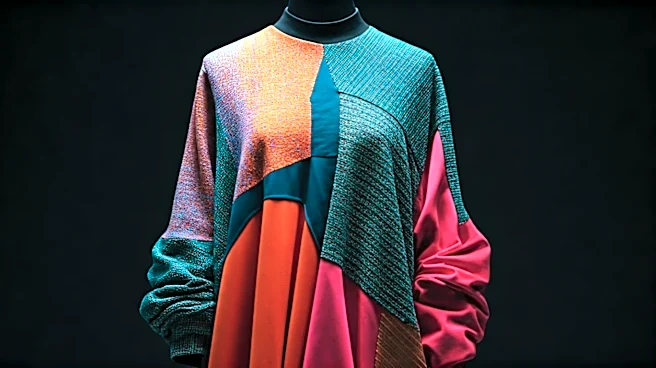
built on centuries of established luxury houses or mass-market commercialism, London's identity is forged in subculture and disruption. There's a foundational belief that fashion should be a statement, not just a commodity. This spirit encourages designers to prioritize a powerful point of view over a safe, sellable product. A collection that starts a conversation, shocks the senses, or introduces a truly bizarre new silhouette is often hailed as a success in London, whereas it might be deemed a commercial failure elsewhere. This cultural DNA provides the fertile ground from which everything else grows.
An Unrivaled Talent Pipeline
London is home to what is arguably the world's most influential fashion school: Central Saint Martins. Alongside other prestigious institutions like the London College of Fashion, it acts as a super-charged incubator for raw, unfiltered talent. The CSM graduate show is one of the hottest tickets of the week, scouted by everyone from LVMH executives to indie magazine editors. For generations, this pipeline has fed the industry its most visionary and disruptive forces, from John Galliano and the late Alexander McQueen to more recent stars like Simone Rocha and Richard Quinn. The curriculum in these schools emphasizes conceptual thinking and artistic exploration over simple commercial viability. Students are encouraged to develop a unique voice, take risks, and push boundaries, ensuring that each new graduating class injects a fresh dose of avant-garde energy directly into the city's fashion ecosystem.
A Unique System of Support
Creativity can't flourish in a vacuum, especially when it costs a fortune to stage a fashion show. This is where London’s secret weapon comes in: institutional support. The British Fashion Council’s NEWGEN initiative is a pivotal program that provides financial backing, mentorship, and a coveted runway slot to promising young designers. For many emerging talents, NEWGEN is the only reason they can afford to participate in fashion week at all. It acts as a crucial safety net, allowing designers to experiment without the immediate pressure of finding a massive commercial backer. By subsidizing risk, the BFC actively cultivates an environment where wild ideas can take root. This is a stark contrast to a city like New York, where the path for young designers is often far more precarious and dependent on securing private investment early on.
A Different Definition of Success
Ultimately, London’s experimental nature comes down to a different set of priorities. While New York Fashion Week is heavily focused on buyers and department store sales, and Paris is the stage for global luxury conglomerates to assert their dominance, London operates on a different frequency. Here, success is often measured in cultural impact and critical acclaim. Designers like Matty Bovan, with his chaotic, handcrafted creations, or Dilara Findikoglu, with her dark, theatrical romanticism, thrive in London because the ecosystem values their unique vision above all else. They may not be churning out thousands of sellable handbags, but they are pushing fashion forward, influencing stylists, inspiring other designers, and keeping the industry from becoming a monotonous sea of beige trench coats. London serves as the industry's de facto research and development lab, and the entire world reaps the benefits of its creative chaos.