




Why It's a Terrible Idea
Let’s be honest: a sitcom about the Founding Fathers is a minefield. These are figures shrouded in national myth, their faces literally carved into mountains and printed on money. Turning them into sitcom characters risks trivializing their complex legacies.
The biggest challenge is history itself. How does a comedy handle the profound moral contradictions of men who spoke of liberty while enslaving people? A 22-minute episode can’t easily reconcile Thomas Jefferson, the eloquent author of the Declaration of Independence, with Jefferson, the slaveholder. The danger is creating something either offensively flippant or so toothless it becomes an educational cartoon. Shows that blend history and comedy, like "The Great" or "Dickinson," succeed by adopting a specific, often satirical, point of view. A Founding Fathers show would have to navigate the reverence Americans hold for these figures, a reverence far more intense than for 18th-century Russian royals. One wrong joke about the Constitution and you're canceled. The entire concept teeters on the edge of becoming a cringeworthy parody, flattening historical giants into one-dimensional gag machines.
Why It Might Just Work
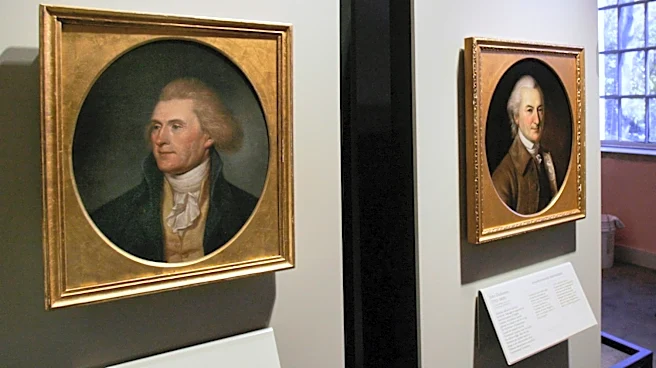
Despite the risks, the idea is weirdly compelling because the source material is sitcom gold. The Founding Fathers weren't a monolith; they were a collection of brilliant, ambitious, and deeply flawed individuals with massive egos, forced to work together under immense pressure. That’s not a political theory panel—that’s the premise of "The Office." The inherent conflict is baked right in. You have the bitter rivalry between the high-minded, hypocritical Jefferson and the pragmatic, relentless Alexander Hamilton. You have the odd-couple friendship of the bombastic, insecure John Adams and the worldly, witty Benjamin Franklin. George Washington is the ultimate beleaguered boss, trying to keep his team from tearing each other apart. The success of "Hamilton" proved there's a huge appetite for seeing these figures as passionate, dynamic people rather than dusty portraits. By using modern storytelling and a diverse cast, the musical made them relatable. A sitcom could do the same, using humor to explore their humanity, their pettiness, and the absurd gap between their lofty ideals and their messy reality.
Casting the Continental Congress
Every great sitcom runs on well-defined character archetypes, and the Founders fit them perfectly. George Washington is the 'Straight Man' or 'The Anchor'—the exasperated leader trying to herd cats, embodying the weary authority of a Leslie Knope or Michael Bluth. Benjamin Franklin is the 'Eccentric' or 'Trickster'—the wisecracking, girl-chasing, wildly inventive wildcard who lives by his own rules. He's part Kramer, part Frank Reynolds, and known for his sharp, satirical wit. John Adams is the classic 'Neurotic,' a brilliant but deeply insecure overachiever, desperate for validation, much like a George Costanza or Dwight Schrute. Thomas Jefferson is the 'Idealist' with a hint of the 'Snob,' an intellectual who’s a bit detached from reality and whose elegant principles don’t always align with his actions. And Alexander Hamilton? He's the ambitious 'Rebel,' the scrappy upstart ready to tear down the old rules to get ahead, a character driven by relentless energy and a chip on his shoulder. These aren't just historical figures; they're a ready-made ensemble cast.
Finding the Right Premise
The setting would be crucial. A workplace comedy set during the Second Continental Congress in Philadelphia offers the most potential. The show could be called "Independence Hall" or "The Committee." The 'cold open' for each episode could be a debate over a ridiculously mundane clause in a new bill, escalating into personal attacks. The central conflict wouldn't be just about forming a nation, but about who finished the last of the coffee, who gets the better chair, and who has to sit next to the guy from Rhode Island. Another option is a 'share house' comedy set in Paris, with Franklin, Adams, and Jefferson navigating diplomatic intrigue and a culture clash as unwilling American roommates. The claustrophobic environment would force their clashing personalities to the forefront. The key is to ground the high-stakes history in the low-stakes, relatable conflicts of everyday life. The humor would come from the juxtaposition: they're debating the philosophical foundation of a new republic, but they're also just deeply annoying one another.