


The Battle Against Physics
The core challenge at any huge outdoor venue like Austin's Zilker Park is physics. Sound travels at about 767 miles per hour, which feels instant up close but creates a noticeable delay over long distances. An audience member 400 feet from the stage would
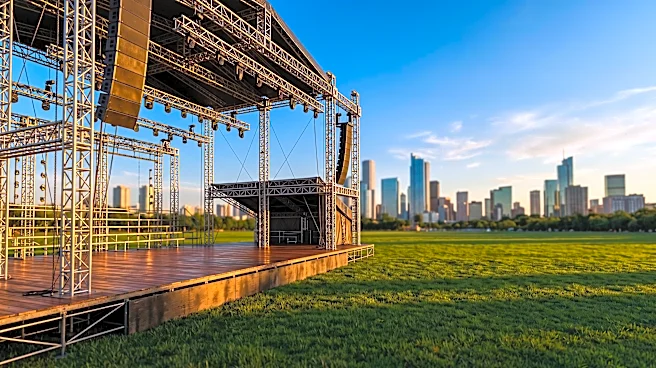
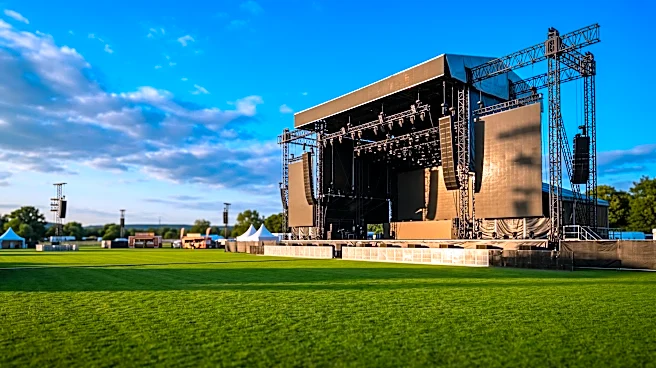
hear the music almost half a second after someone in the front row. Without intervention, this would result in a chaotic, echoing mess, making a group singalong impossible. The first part of the "secret" is overcoming this with massive, precisely curved speaker setups called line arrays. These behemoths, hanging from the stage wings, are engineered to throw sound over massive distances, ensuring the person at the back of the field gets clear, powerful audio. Production companies like LD Systems, which handles the main stages at ACL, use sophisticated software to model the park and design speaker configurations that provide consistent coverage for the entire audience.
The Unsung Heroes: Delay Towers
Even the best line arrays have their limits. To ensure a truly unified experience, engineers rely on their most crucial tool: delay towers. These are the smaller speaker stacks you see scattered throughout the middle and back of the crowd. Their job is deceptively complex. They aren't just making the music louder for the people in the back; they are re-transmitting the sound on a microscopic time delay. An engineer calculates the time it takes for the sound from the main stage to reach a specific point in the field. The delay tower at that spot is then timed to fire its audio so it arrives at the listener's ear just milliseconds after the sound from the stage. This technique tricks the human brain, which perceives the two sounds as a single, coherent source. The result is a seamless audio handoff that maintains clarity and rhythm from the front row to the very back fence, making a synchronized singalong physically possible.
The Artistry of the Live Mix
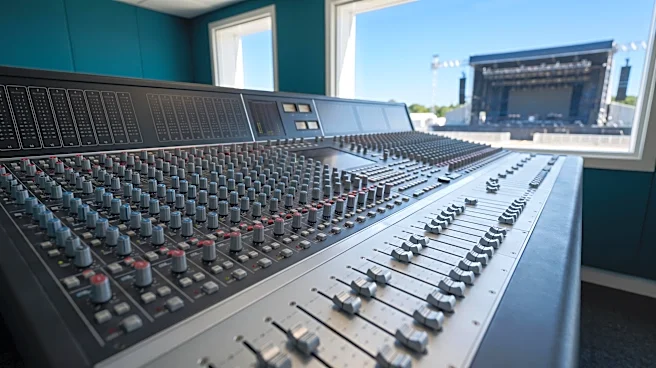
With the physics handled, the next layer of the secret lies with the Front of House (FOH) engineer—the person at that giant mixing console in the middle of the crowd. Their job is part science, part art. During a show, they are constantly balancing hundreds of audio channels to create a powerful mix. When they sense a singalong moment approaching, a great engineer knows how to encourage it. They might subtly pull down the level of the backing instruments or gently compress the lead vocal to create more sonic space for the crowd's voices to fill. They can even use microphones aimed at the audience to capture the sound of the singing and blend it back into the main PA system, making the collective voice feel even bigger and more powerful. This creates a feedback loop where the crowd hears themselves and sings even louder.
The Final Ingredient: The Artist
Of course, all the technology in the world can't create a moment out of thin air. The final, and perhaps most important, piece of the puzzle is the artist on stage. Experienced performers are masters of reading and directing a crowd's energy. They build their setlists with anthemic songs perfectly placed to create those high-energy peaks. They know exactly when to stop playing and point the microphone toward the audience, giving them the space and the cue to take over. This collaboration—between the artist's showmanship, the engineer's real-time mixing, and a sound system designed for perfect synchronization—is the true secret. It's a carefully constructed system where every person, from the band to the tech crew to the fans themselves, plays a part.