




The Other Midnight Riders
We all know about Paul Revere, but his was hardly a solo act. A savvy filmmaker could pan from Revere to show other riders like William Dawes or Samuel Prescott, who actually completed the mission after Revere was captured. For a real deep cut, a series
could feature Sybil Ludington, a 16-year-old who rode twice as far as Revere through a rainstorm to muster her father's militia. A quick shot of a determined young woman on horseback wouldn't just be a nod to a lesser-known hero; it would be a more accurate portrayal of how the call to arms really spread.
The Faces in the Continental Army
History class often gives us a monolithic image of the Continental Army, but the reality was far more diverse. A drama committed to authenticity could show this in the background of every camp scene. There were Black soldiers, both enslaved and free, fighting for the cause. Figures like James Armistead Lafayette, an enslaved man who became a crucial double agent, could move from the background to the foreground. John Laurens' passionate, but failed, attempts to recruit a battalion of enslaved men in exchange for their freedom would make for a powerful subplot, showing the deep internal conflicts of the era.
The Financier Who Wasn't Hamilton
While one musical made Alexander Hamilton a household name, the Revolution had other financial wizards whose stories are ripe for the screen. Enter Robert Morris, a merchant who practically bankrolled the Continental Army out of his own pocket when Congress was broke. A scene showing George Washington in despair over his unpaid troops could be resolved not by a government decree, but by a letter from Morris securing a personal loan to buy supplies. It’s a subtle nod to the fact that the war was often held together by private wealth and sheer will, not just political ideals.
The Women Who Weren't Just Wives
Beyond the roles of concerned spouses, women were active participants in the Revolution. A scene in a war council could include a mention of the Ladies Association of Philadelphia, organized by Esther de Berdt Reed, which raised significant funds for the soldiers. On the battlefield, a character could whisper the legend of Margaret Corbin or the real-life account of Deborah Sampson, who disguised herself as a man to fight in the army. Showing Sampson tending to her own gunshot wound to avoid discovery by a doctor would be a gripping, cinematic moment of hidden history.
The Actual Value of a Dollar
We hear phrases like "not worth a Continental" without much thought, but it was a grim reality for the colonists. An authentic drama could show this in small, powerful ways. Imagine a scene where a soldier tries to buy bread with a handful of paper Continental Dollars, only to be laughed out of the shop. The baker would only accept a Spanish silver dollar, the hard currency of the day. This small moment would instantly illustrate the economic chaos of the war and the immense challenge of funding a revolution with nearly worthless paper money. It’s a detail that adds a layer of grit and realism to the powdered-wig fantasy.
The Real Declaration Debate
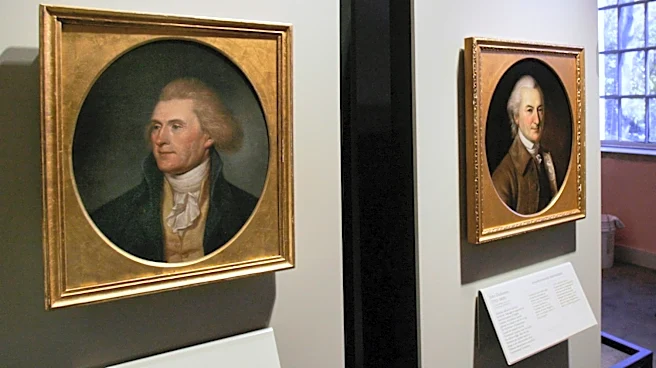
The signing of the Declaration of Independence is often depicted as a moment of unanimous, triumphant patriotism. But the Continental Congress actually voted for independence on July 2nd, not the 4th. A truly interesting “Easter egg” would be a scene set on July 3rd, with delegates arguing over the exact wording of Jefferson's draft, cleaning up grammar, and making crucial edits. This behind-the-scenes glimpse would replace the myth of a single, perfect moment with the messier, more human reality of compromise and collaboration that truly defined the nation's founding.