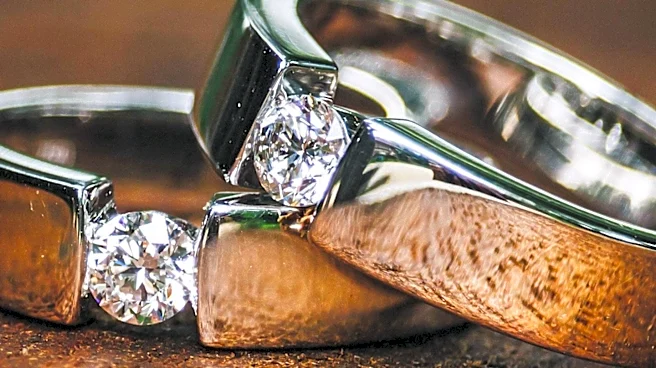

Looking Beyond the Obvious
Shopping for a solitaire engagement ring can feel like a crash course in gemology. You learn about the Four Cs—cut, color, clarity, and carat—and compare stones until your eyes glaze over. But here’s the secret:
the diamond is only half the story. The setting isn’t just a simple cradle for the stone; it's the architecture that provides security, enhances brilliance, and ensures the ring will last a lifetime. Mass-produced rings often look great at a glance, but they can hide shortcuts that compromise their structure and beauty over time. True artisans, however, leave clues to their skill in places most people never think to inspect. Recognizing these signs is the key to separating a merely good ring from a truly exceptional one, giving you confidence that you’re investing in quality that extends far beyond the surface.
The Telltale Sign: The Finish Underneath
The single most revealing detail of craftsmanship is hidden in plain sight: the finish inside the ring’s gallery. The gallery is the part of the setting directly beneath the diamond, the intricate metalwork you can see when you view the ring from the side. In a mass-produced setting, this area is often an afterthought. It might feel rough to the touch, with visible casting marks, tiny pits, or an inconsistent polish. The logic is simple: why spend time and money perfecting a surface nobody will see? But for a master jeweler, every surface matters. They will take the time to meticulously hand-polish the interior of the gallery and even the inner surfaces of the prongs, ensuring they are just as smooth and lustrous as the visible parts of the ring. This isn't just about aesthetics; it’s a hallmark of a process where no corners were cut.
Why a Polished Interior Matters
A perfectly polished under-gallery does more than just signal obsessive attention to detail. It serves several practical purposes. First, smooth surfaces are less likely to trap dirt, oils, and lotions, which can build up over time and dull the diamond's sparkle from below. A clean, open gallery allows more light to enter the pavilion (the bottom part of the diamond), significantly enhancing its brilliance. Second, it’s a matter of comfort. While you may not consciously feel it, a rough interior can be slightly abrasive against the skin. A mirror-smooth finish ensures the ring feels as good as it looks. Most importantly, a beautifully finished interior is a proxy for the quality of the entire piece. A jeweler who takes the pride and time to perfect hidden areas has almost certainly applied that same level of care to the more critical structural elements, like the security of the prongs and the symmetry of the setting.
How to Spot a Master's Touch
You don't need to be a gemologist to check for this sign of quality. When you’re examining a ring, simply turn it to the side. If possible, use a jeweler's loupe, but even the zoom function on your phone’s camera can work. Look at the metalwork sitting directly underneath the diamond. What you want to see is a smooth, highly polished surface that reflects light evenly, almost like a tiny mirror. What you want to avoid are any signs of roughness, a grainy texture, or visible seams from where the setting was soldered together. Gently run your fingertip over the area if you can; it should feel perfectly sleek. Compare a few rings, and the difference will become obvious. The piece with the impeccable interior finish is almost guaranteed to be the work of a more skilled artisan who believes craftsmanship should be built in, not just polished on.