




First, What Is Sleeve Pitch?
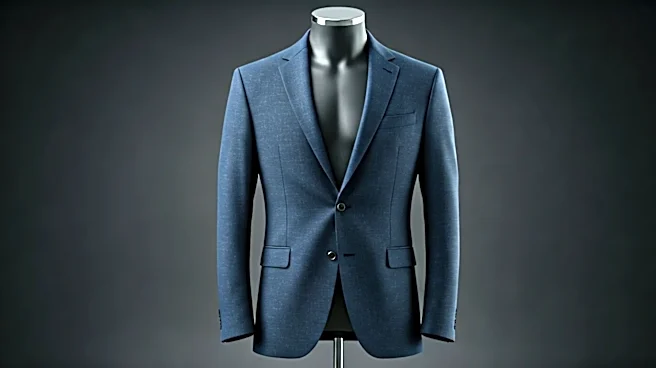
Imagine a suit jacket hanging perfectly on a mannequin. Its arms are likely straight down. Now, look at how your own arms hang. They aren't perfectly vertical; they have a slight forward or backward angle based on your posture, shoulder shape, and musculature.
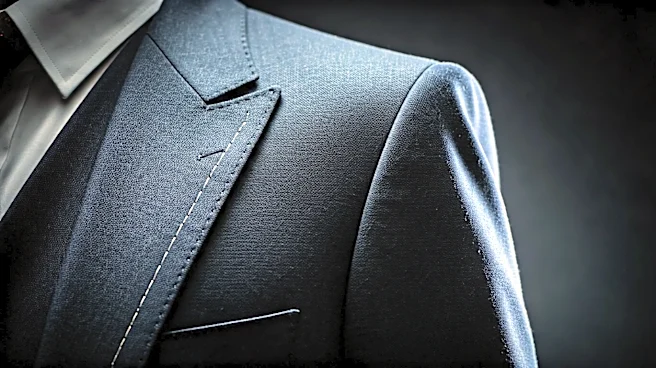
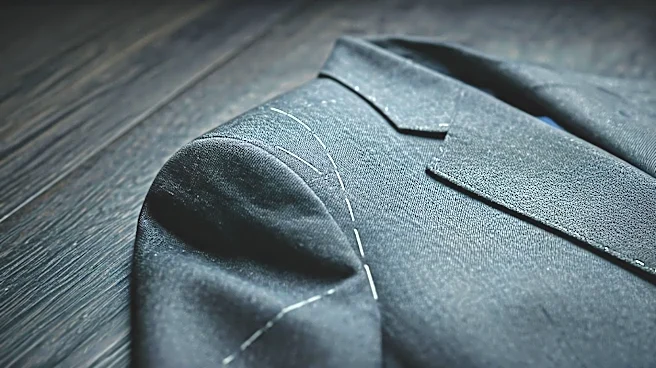
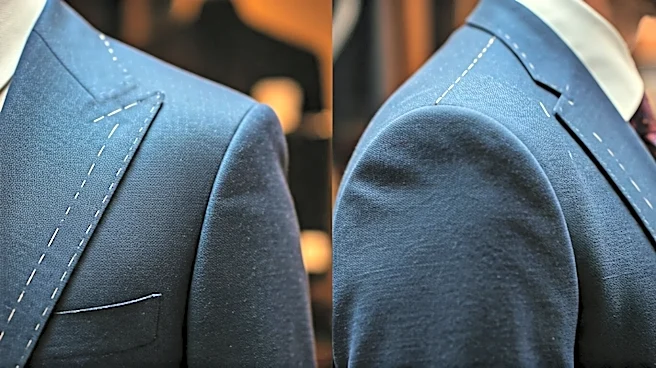
Sleeve pitch, also known as sleeve attitude, is the angle at which a jacket’s sleeve is attached to the armhole to match the natural hang of your specific arms. Think of it as rotating the entire sleeve forward or backward a few degrees. A tailor determines this by observing your posture from the side. Someone who slouches will have a different arm pitch than someone who stands ramrod straight or has highly developed chest muscles from working out.
The Telltale Signs of a Mismatch
When the sleeve pitch is wrong for you, the fabric is fighting your body. The most common sign is a series of diagonal wrinkles or twisting on the sleeve, usually running from the shoulder down towards your cuff. If your natural arm hang is more forward than the jacket's default pitch, you'll see bunching and pulling at the front of the armhole and tightness across your upper back when you relax your arms. Conversely, if your arms hang further back, you’ll see ripples at the back of the sleeve. It creates an unflattering, messy look, no matter how expensive the fabric or how well the jacket fits when you’re standing perfectly still. A correctly pitched sleeve, on the other hand, drapes cleanly with no twisting or stress lines, allowing for a full range of motion without the jacket pulling or bunching.
The Off-the-Rack Compromise
This is where we separate the merely expensive from the truly custom. An off-the-rack (OTR) suit, even from a luxury designer costing thousands of dollars, is built for a standardized, average body. The manufacturer chooses a single, neutral sleeve pitch that they hope will work for the most people. For many men, this is 'good enough.' But for anyone with a unique posture—be it from sitting at a desk all day, athletic development, or just genetics—this standardized pitch will never be perfect. Altering sleeve pitch is a complex and costly piece of tailoring that can’t be done easily after the fact. It requires recutting the armhole and sleeve head, a job most local alteration shops aren't equipped for and which is rarely worth the cost on a finished garment.
The Bespoke and Custom Difference
This detail is the heart of what you’re paying for with custom tailoring. During a bespoke fitting, a master tailor doesn't just take measurements; they analyze your posture. They’ll note the angle of your arms and draft a unique paper pattern specifically for you. The sleeve is then attached at the precise pitch your body requires. This is a fundamental step in the bespoke process. Even in the slightly lower tier of made-to-measure (MTM) suiting, the ability to adjust sleeve pitch is a key differentiator. Lower-end MTM programs often just tweak a standard block pattern—adjusting sleeve length or waist circumference—but can't address pitch. Higher-end MTM and true bespoke services build this correction in from the start. It’s a detail you can’t see on the hanger, but you can absolutely see and feel it when the jacket is on.