



1. Red and Yellow Cards (1970)
Imagine a World Cup where a player gets sent off, but half the stadium—and the player himself—isn’t sure what’s happening. Before 1970, that was the reality. Referees verbally cautioned or dismissed players, leading to confusion, language barriers, and chaos.
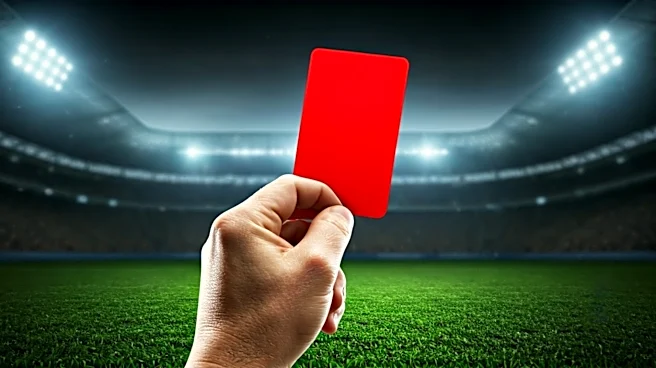
The most famous example was the 1966 quarter-final between England and Argentina, dubbed “the war,” where an Argentine player refused to leave the pitch for ten minutes after being sent off, claiming he didn’t understand the referee. Enter Ken Aston, an English referee who, when sitting at a traffic light, had a eureka moment. Red and yellow lights are a universal language. Why not apply that to soccer? The cards were introduced at the 1970 World Cup in Mexico. Suddenly, discipline was clear, visual, and non-negotiable. This didn’t just clean up the game; it created a new kind of drama. The suspense of a player on a yellow card, walking a tightrope for the rest of the match. The tactical nightmare of going down to 10 men. The cards codified misconduct and turned discipline into a visible, strategic element of every single game.
2. The Back-Pass Rule (1992)
The 1990 World Cup in Italy is infamous for being, well, boring. It set records for the lowest goals-per-game average and the most red cards. A key culprit was the defensive tactic of a defender, under the slightest pressure, simply passing the ball back to their goalkeeper, who could then pick it up and waste precious time. It was safe, effective, and absolutely dreadful to watch. FIFA knew it had a problem. To force more attacking, dynamic play, they implemented the back-pass rule in 1992. From then on, goalkeepers were forbidden from handling a ball that was deliberately kicked to them by a teammate. This one change had a seismic impact. It killed the most common time-wasting tactic and forced teams to play their way out of trouble. More importantly, it revolutionized the goalkeeper position. Keepers had to become proficient with their feet, effectively acting as an 11th outfield player. The drama of a keeper miscontrolling a back-pass and conceding a calamitous goal became a new, heart-stopping feature of the modern game.
3. Goal-Line Technology (2014)
For decades, the “ghost goal” was a core part of soccer’s contentious folklore. Did the ball *really* cross the line? In 2010, England’s Frank Lampard fired a shot against Germany that clearly crossed the goal line by a good foot, but the referee missed it. England, psychologically shattered, went on to lose 4-1. The injustice was so blatant it became a global talking point and the final push FIFA needed to embrace technology. By the 2014 World Cup in Brazil, goal-line technology was in place. A system of high-speed cameras tracked the ball, and if it fully crossed the line, the referee received an instant notification on their watch. The first official World Cup goal awarded by the system came in a France vs. Honduras match. The tech worked perfectly. It ended one of the sport's most frustrating and endless debates. In doing so, it traded one kind of drama—the furious, subjective argument over what the human eye saw—for another: the cold, instant, and indisputable verdict of a machine.
4. Video Assistant Referee (VAR) (2018)
If goal-line technology was a surgical strike against one specific problem, VAR was a full-scale assault on officiating error. Introduced at the 2018 World Cup in Russia, the Video Assistant Referee was designed to help on-field officials correct “clear and obvious errors” related to goals, penalty decisions, direct red cards, and mistaken identity. The goal was simple: more accuracy, less controversy. The result has been anything but simple. VAR has become the single most divisive element of modern soccer. The drama of a bad call on the field has been replaced by the excruciating, minutes-long wait as a remote official in a dark room scrutinizes replays in slow motion. The spontaneous joy of a goal is now frequently muted, pending a VAR check for a microscopic offside or a subtle foul in the buildup. Instead of eliminating arguments, VAR has just moved them. Now we argue about the technology itself: what constitutes “clear and obvious”? Why did VAR intervene here but not there? It created a new form of drama rooted in agonizing suspense and forensic-level debate.
5. Aggressive Added Time (2022)
Soccer games are 90 minutes long, but the ball is only in play for about 55-60 of them. The rest is lost to injuries, substitutions, goal celebrations, and time-wasting. Traditionally, referees would add a token three or four minutes of stoppage time. But at the 2022 World Cup in Qatar, FIFA instructed officials to get serious about it. Suddenly, games were clocking in at over 100 minutes. The fourth official’s board flashing “+8” or “+11” became a regular sight. This fundamentally changed the endgame. A team couldn’t just defend a 1-0 lead for the last ten minutes and coast to victory through tactical delays. They now had to contend with what felt like another full period of play. This led to frantic, exhausting finales and a flurry of dramatic late goals, like Iran’s two strikes against Wales deep into stoppage time. It shifted the psychological drama, making no lead feel safe and rewarding teams with superior fitness and mental stamina.