


The Silhouette We All Know
When you think of female rockabilly fashion, one image immediately comes to mind: the swing dress. This quintessential 1950s look features a fitted bodice that dramatically cinches the waist, exploding into a voluminous, knee-length circle skirt. Often
buoyed by layers of petticoats, this silhouette celebrated an hourglass figure that was a world away from the boxy, fabric-rationed styles of World War II. The look was youthful, energetic, and perfect for dancing to the rebellious new sound of rock and roll. Paired with bold patterns like polka dots or cherries, saddle shoes, and a devil-may-care attitude, this silhouette came to define a uniquely American youthquake.
The Paris Connection
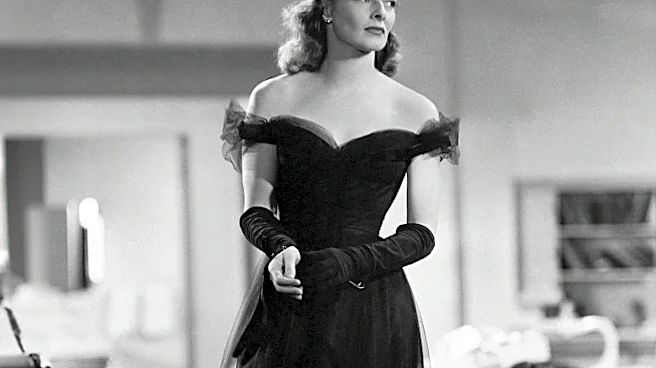
It’s easy to assume this hyper-feminine shape was simply a product of post-war optimism. The most direct comparison is to Christian Dior's groundbreaking 1947 "New Look." After years of wartime austerity, Dior introduced a collection in Paris that shocked and thrilled the world with its opulence, featuring sloped shoulders, a tiny waist, and extravagantly full skirts that used yards of fabric. This was a direct rejection of the masculine, militant styles of the 1940s. The Rockabilly swing dress certainly shares a similar shape with Dior's couture creations, both emphasizing that hourglass form. But while they were parallel trends, they weren’t parent and child. One was for wealthy European socialites; the other was for American teens in a rebellious subculture. And both were looking to the same, much older, source for inspiration.
A Journey Further Back in Time
The true origin of this celebrated silhouette lies not in the 1950s, but in the late 19th and early 20th centuries. Christian Dior himself admitted his inspiration for the New Look came from the fashions his mother wore during the Belle Époque (the “Beautiful Era” from roughly 1871 to 1914). This period, an extension of Victorian fashion, celebrated an exaggerated female form achieved through tight-lacing corsets and skirts that were full over the hips. Think of the “Gibson Girl” illustrations from the 1890s, with her S-curved torso and ample skirts. The nipped-waist, full-hip silhouette wasn't a 1950s invention at all; it was a revival. Dior repackaged the opulence and structured femininity of the Victorian and Edwardian ages for a post-war elite.
American Rebellion, Historic Bones
So where does that leave Rockabilly? The American teens who adopted the swing dress weren't thumbing through Victorian fashion plates. They were, however, participating in a broader cultural moment that embraced a nostalgic, idealized femininity. The Rockabilly movement took the same historical hourglass silhouette that Dior was selling to high society and democratized it. They swapped Parisian silk for American cotton and gingham. They stripped the shape of its formal elegance and infused it with a raw, rebellious energy fueled by rock and roll music, hot rods, and a burgeoning youth culture that rejected the staid conservatism of their parents' generation. In essence, both high-fashion Paris and rebellious small-town America reached for the same century-old silhouette to express two very different ideas: one of luxurious return to order, the other of vibrant, youthful freedom.