






The Base Layer Benchmark
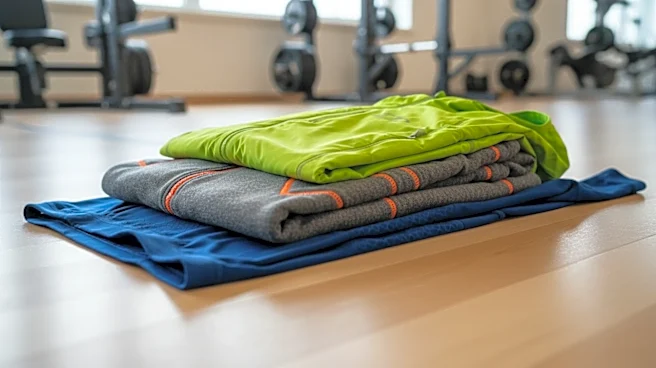
Everything starts with the layer closest to your skin. A base layer's primary job is moisture management, wicking sweat to keep you dry and comfortable. For it to work, it needs to have a snug, next-to-skin fit without being restrictive. When you try
it on, check for any seams that rub or tags that irritate, especially around the underarms and neckline. Raise your arms, twist your torso, and bend over. The hem shouldn't ride up excessively, and the fabric should move with you like a second skin. If it’s too loose, it can't wick effectively; if it's too tight, it will restrict circulation and movement.
The Mid-Layer Mobility Test
The mid-layer provides insulation, trapping body heat to keep you warm. Common options include fleece, down, or synthetic insulated jackets. The biggest mistake here is choosing something too bulky, which creates a Michelin Man effect under your shell and severely limits movement. Your mid-layer should fit comfortably over your base layer, but not be so loose that it allows cold air to sneak in. Zip it up and test your range of motion. Can you reach your arms forward and overhead without the sleeves pulling up drastically or the shoulders feeling tight? The fit should be trim enough to trap heat efficiently but generous enough for you to move naturally.
The Outer Shell Audit
Your outer layer, or shell, is your protection against the elements like wind and rain. It needs to be roomy enough to accommodate your other layers without compressing them—especially any down or synthetic insulation in your mid-layer, which loses its warming power when flattened. Check that the jacket is long enough in the back to cover you when you bend over and that the sleeves are long enough to protect your wrists when you reach forward. If it has a hood, put it on and turn your head side to side. A well-designed hood will turn with your head, not block your peripheral vision.
The Full-System Stress Test
Once you have all your layers on, it’s time for the most important step: the stress test. Don't just stand in front of the mirror. Replicate the movements you'll actually be doing. Perform a few deep squats, twist your torso, do some big arm circles, and walk around. Pay close attention to how the layers interact. Does the base layer bunch up under the mid-layer? Does the mid-layer's zipper awkwardly stack on top of the shell's zipper? This is your chance to identify any points of friction or restriction before you're miles into a hike or halfway through a ski run. Loose layers can cause chafing, while overly tight combinations can hinder performance.
Fabric, Friction, and Function
Finally, close your eyes and just feel the outfit. Are there any spots where fabrics are catching or creating uncomfortable friction? A smooth-faced fleece mid-layer will slide more easily under a shell than a high-pile, fuzzy one. Also, consider the combined breathability of your system. While each piece might be breathable on its own, layering multiple fabrics can sometimes trap more moisture and heat than you’d expect. If you tend to run hot, ensure your mid and outer layers have venting options, like pit-zips, to dump heat quickly. The goal is a cohesive system where each piece works together to keep you dry, warm, and mobile.