








An Asterisk on History
A championship tournament is supposed to be a crucible of talent, strategy, and will. It’s a narrative that builds over weeks, culminating in one team earning the right to be called the best. But sometimes, that narrative gets hijacked. A single, controversial
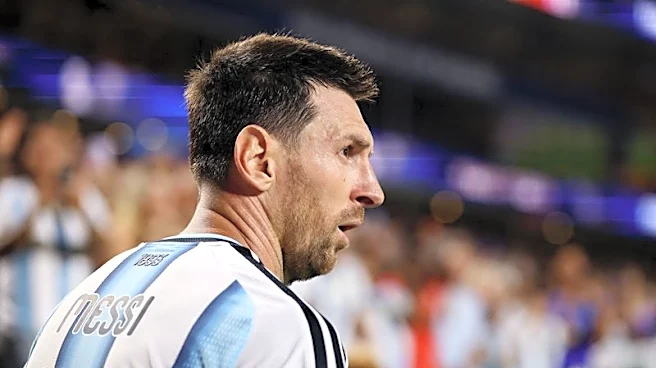
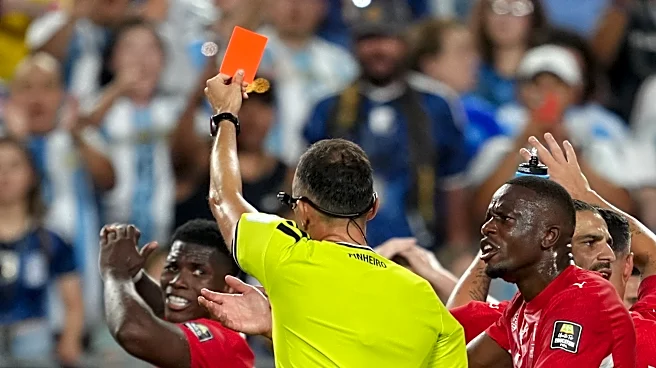
decision by an official can become an inescapable footnote, an asterisk that forever qualifies the outcome. We saw it happen just last week in the FIFA World Cup. Egypt looked to have scored a decisive second goal against reigning champions Argentina, only for the Video Assistant Referee (VAR) to disallow it for a perceived foul nearly 100 yards away from the play. Argentina went on to win in the dying minutes, but the conversation wasn’t about their comeback; it was about the call. The Egyptian coach called the exit "unfair and unjust," and the result was immediately shrouded in controversy, with fans alleging bias. The story was no longer about the players' heroics, but about a moment of perceived injustice that soured the entire event for millions.
The Ghosts of Tournaments Past
This is hardly a new phenomenon. Sports history is littered with the ghosts of tournaments decided by a whistle. Think of Diego Maradona’s infamous “Hand of God” goal that helped eliminate England from the 1986 World Cup, a blatant handball missed by the referee. Or Thierry Henry’s own handball that set up the goal to send France to the 2010 World Cup at the expense of a heartbroken Ireland. These moments don't just decide a single game; they alter legacies. They become shorthand for national grievance and fuel debates that last for decades. The reason these moments sting so badly is that they violate the fundamental promise of sports: that the outcome will be decided by skill and effort on a level playing field. When an external force like a bad call intervenes, it feels like a betrayal of that pact. It introduces a chaotic, random element into what we want to believe is a meritocracy.
The Unforgiving Eye of Technology
Video Assistant Referee, or VAR, was introduced with a simple mission: to correct clear and obvious errors and prevent those headlines about game-stealing mistakes. The idea was to bring greater fairness to the game, using technology to catch what the human eye might miss. Yet, as the 2026 World Cup has shown, technology hasn't eliminated controversy; it has just changed its nature. Instead of debating a missed call, we now debate the interpretation of a super-slow-motion replay. We argue about “toenail offsides” and what constitutes a “clear and obvious error.” Spontaneous goal celebrations are now muted, pending a review that can suck the joy and momentum out of the game. The introduction of new rules, like penalizing players for covering their mouths when speaking to officials, has only added new layers for interpretation and debate. Technology promised objectivity, but it often delivers only a more granular form of subjectivity, leaving fans and players just as frustrated.
Why We Can't Look Away
The obsession with controversial calls is rooted in deep-seated cognitive biases. We are wired to focus on the negative, the aberration, rather than the hundreds of correct calls made in a game. Fandom itself is a form of tribalism; we see the world through the lens of our team, and any decision that goes against us can feel like a personal attack or proof of a conspiracy. A bad call is a perfect scapegoat. It’s an easy-to-understand narrative that absolves our team of its own shortcomings—the missed shots, the defensive lapses, the poor game plan. It’s simpler to blame one person in stripes than to accept a complex and painful defeat. The referee, an impartial arbiter, becomes the villain in the story we tell ourselves to make sense of a loss.