






The Championship That Cements a Legacy
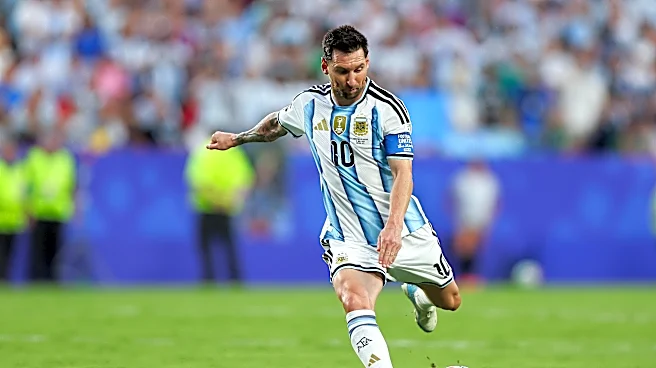
Nothing builds a myth faster than a career-defining performance on the biggest stage. For soccer icons, that stage is the World Cup final. Lionel Messi’s 2022 victory with Argentina wasn’t just a win; it was the completion of his personal epic, the final piece
of a puzzle that elevated him for many into the undisputed “greatest of all time.” It was his version of Michael Jordan’s “Flu Game” in the 1997 NBA Finals. The story of Jordan, weakened by what was believed to be the flu (though his trainer later claimed it was food poisoning), scoring 38 points to lead the Bulls to a pivotal victory is etched into American sports lore. The details—Jordan collapsing into Scottie Pippen’s arms—are as important as the stat line. For both Messi and Jordan, these weren't just championships; they were moments of supreme struggle and ultimate triumph that demonstrated a will to win that bordered on superhuman.
The All-American Underdog Story
American sports culture loves a good underdog narrative, and no one embodies this more than Tom Brady. Selected with the 199th pick in the sixth round of the 2000 NFL Draft, his origin story is one of being overlooked and underestimated. Six other quarterbacks were chosen before him. That perceived slight became the fuel for a two-decade dynasty, creating a mythology built on proving everyone wrong. This narrative arc is mirrored in the careers of global soccer stars. Cristiano Ronaldo, for instance, overcame a racing heart condition that required surgery as a teenager and grew up in poverty before becoming a global phenomenon. Lionel Messi was so small as a child due to a growth hormone deficiency that clubs were hesitant to invest in his treatment. These early struggles are crucial; they make their eventual dominance feel not just impressive, but fated.
An Era-Defining Rivalry
Every hero needs a worthy adversary. In the U.S., the 1980s NBA was defined by the coastal clash between Magic Johnson’s Lakers and Larry Bird’s Celtics. Their rivalry wasn’t just about basketball; it was about contrasting styles and personalities that lifted the entire sport. The same dynamic played out for nearly two decades in global soccer with Lionel Messi and Cristiano Ronaldo. Their battle, often waged in the heated El Clásico matches between Barcelona and Real Madrid, was a weekly referendum on greatness. Messi, the quiet, dribbling artist, against Ronaldo, the powerful, athletic marvel. This constant comparison pushed both to unprecedented heights, and like Magic and Bird, their intertwined legacies are impossible to separate. The debate over who is better is less important than the fact that the rivalry itself created a golden era for the sport.
Transcending the Game Itself
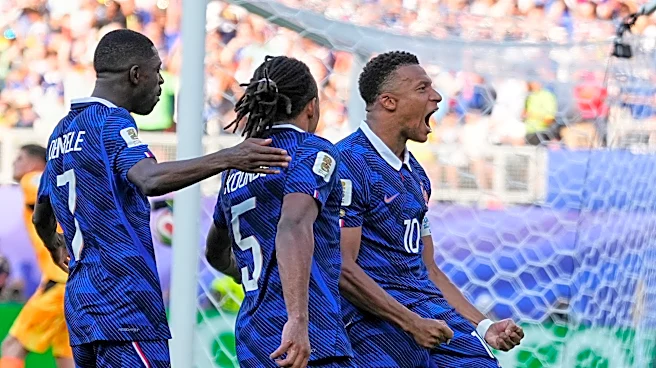
The final step to mythology is becoming bigger than the sport itself. In the U.S., athletes like Babe Ruth and Michael Jordan became cultural icons whose fame extended far beyond the ballpark or basketball court. They influenced fashion, appeared in movies, and became global marketing forces. Today’s soccer icons operate on a similar, if not larger, global scale. As the 2026 World Cup currently captivates the world, players like France’s Kylian Mbappé are at the center of the narrative. Already a World Cup winner as a teenager, his quest for scoring records and another title is a dominant storyline. His influence is seen in major sponsorship deals and brand collaborations that place him at the intersection of sports, fashion, and entertainment, turning athletic prowess into a global cultural footprint.