






1. The Group Stage: West Coast Kickoff
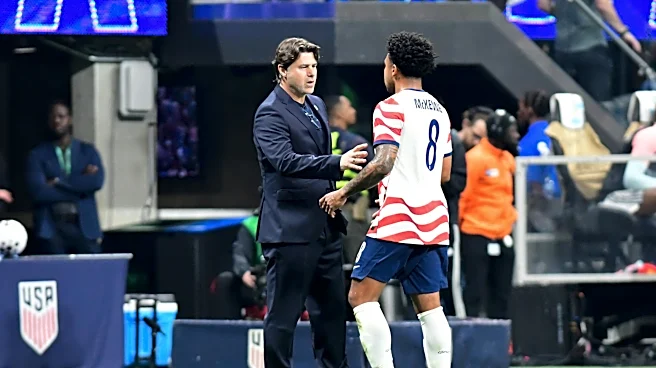
First, the basics. The U.S. Men’s National Team (USMNT) gets an automatic spot as a co-host and is pre-assigned to Group D. They won't have to travel far. Their journey begins on June 12 at SoFi Stadium in Los Angeles, heads north to Seattle’s Lumen Field
on June 19, and returns to LA for the group finale on June 25. The goal here is simple: finish first. In the new format, the top two teams in each of the 12 groups advance, along with the eight best third-place teams. Winning the group is crucial, as it almost guarantees a more favorable opponent in the first knockout round. A second-place finish makes the road immediately more difficult.
2. The Round of 32: Avoiding the First Trap
Welcome to the brand-new, high-stakes Round of 32. If the USMNT wins Group D, they’ll likely travel to the Bay Area (Levi's Stadium) to face a third-place team from another group. This is the dream scenario: a winnable game against a team that barely scraped through. However, if the U.S. finishes second in their group, the path gets rocky, fast. They would likely have to travel to Dallas to face the winner of Group C—a group that could easily contain a powerhouse like Argentina or England. This is the first major inflection point of the tournament, where a simple group stage slip-up could lead to a brutal matchup and an early exit.
3. The Round of 16: The Inevitable Mexico Showdown?
This is the one to circle on your calendar. Due to the way the bracket is structured, a knockout-round clash between the USA and Mexico is a very real possibility, and it could happen as early as the Round of 16. If both teams win their respective groups (Mexico is in Group A), the earliest they could meet is the final. But if one wins their group and the other finishes second, the stage is set for a monumental showdown in front of a likely divided stadium. There is no bigger narrative in North American soccer than USA vs. Mexico. A knockout game on home soil would be an electric, legacy-defining event for whichever team comes out on top.
4. The Quarterfinals: Slaying a European Giant
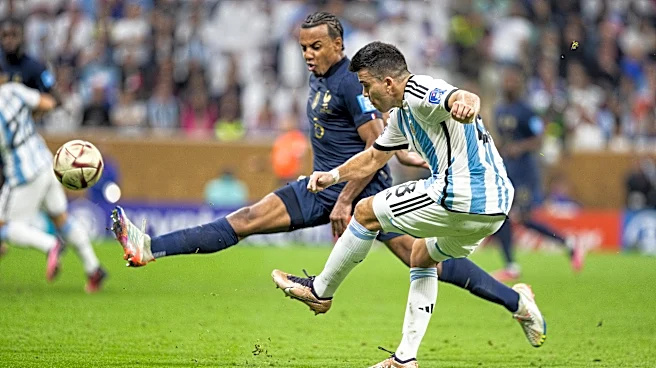
For decades, the quarterfinals have been the glass ceiling for the USMNT. To break through, they will almost certainly have to go through one of the world’s elite teams. This is where the dream run meets cold, hard reality. Based on a plausible bracket projection, a deep run for the U.S. would likely put them on a collision course with a top-tier European side—think France, Spain, or Portugal—in a major hub like Kansas City or Boston. This is the game that separates the good teams from the great ones. A victory here wouldn't just be an upset; it would be a statement to the entire world that American soccer has truly arrived.
5. The Final Destination: MetLife Stadium
Every path, every dream, every potential bracket permutation leads to one place: MetLife Stadium in East Rutherford, New Jersey, on July 19, 2026. The two semifinal games will be held in Dallas and Atlanta. If the U.S. can navigate the group stage, win its first knockout game, survive a regional rivalry clash, and then topple a global titan in the quarterfinals, they would find themselves in Atlanta for a chance to play for it all. The journey is long and filled with peril, but for the first time, the entire path is on home turf. From the opening whistle in LA to the final showdown just outside New York City, this is the geographic and competitive road map that could define a generation of American soccer.