




An Untouchable Comedy Rockstar
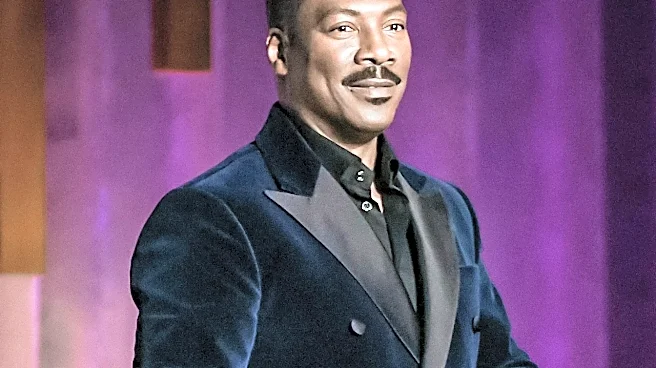
To understand the genesis of Raw, you have to understand the stratosphere Eddie Murphy occupied in the mid-1980s. He had saved Saturday Night Live, launched a blockbuster film career with hits like 48 Hrs. and Beverly Hills Cop, and redefined stand-up
with his 1983 special, Delirious. He was a global phenomenon whose comedic voice—a mix of charming swagger, sharp observations, and explosive profanity—was the pulse of pop culture. The expectation for his follow-up to Delirious wasn't just for another comedy special; it was for a major cultural event. Paramount Pictures gave him an $8 million budget, an unprecedented sum for a stand-up film at the time, signaling that this was intended to be a full-fledged cinematic release.
The Original Pitch: A Creative Summit
The initial concept for what would become Raw wasn't as simple as just pointing a camera at Murphy on stage. The project was a collaborative effort involving some of the sharpest rising talents in Black comedy. Keenen Ivory Wayans, a friend of Murphy's and a future comedy mogul himself, served as a writer and producer. The original idea was more expansive, envisioned with more moving parts than just a straight performance. The film opens with a lovingly produced short film, a sketch about a childhood Thanksgiving where a young Eddie (played by Deon Richmond) first discovers the power of a shocking joke. This opening, written by Murphy and Wayans, hints at a broader vision that could have included more pre-taped segments or a different structure altogether, reflecting the ensemble creativity that was fueling it.
Robert Townsend’s Game-Changing Vision
The crucial turning point came with the hiring of director Robert Townsend. Fresh off the success of his groundbreaking indie satire Hollywood Shuffle, which he co-wrote with Wayans, Townsend brought a distinct artistic perspective. Instead of building a variety show-style special around Murphy, Townsend recognized that the real power was Murphy himself—alone on a stage, with a microphone and a live audience. He advocated for a stripped-down, cinematic approach. His goal was to capture the raw energy of Murphy's performance, making the audience feel like they were right there in New York's Felt Forum. Townsend, along with cinematographer Ernest Dickerson, made the deliberate choice to treat the concert like a feature film, focusing on Murphy’s magnetic stage presence and commanding physicality.
From Broad Concept to a Singular 'Raw' Power
Under Townsend’s direction, the project was distilled to its potent essence. The film would be bookended by the childhood sketch, but the heart of the movie—nearly all of its 90-minute runtime—would be pure, uncut Eddie Murphy. This focus allowed Murphy to deliver his now-legendary material on relationships, divorce, and fame, including his famous story about Bill Cosby calling to chastise him for his profanity. The decision paid off. Eddie Murphy Raw became a monumental success, grossing over $50 million and setting a record for stand-up comedy films that still stands today. It captured a singular talent at his absolute peak, a result made possible by collaborators who understood that sometimes, the most powerful move is to clear the stage and let a master work.