


A Silhouette Forged by Austerity
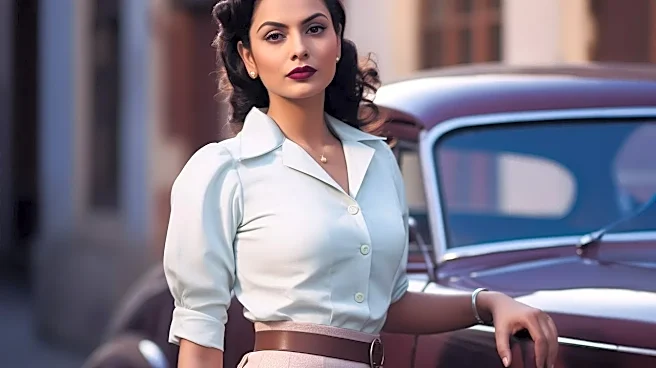
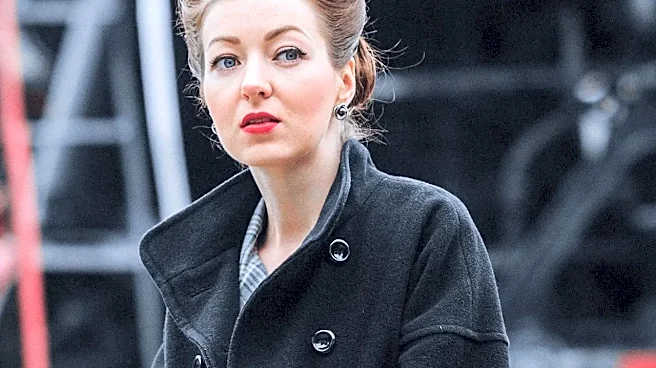
When you picture 1940s fashion, a distinct image comes to mind: a woman in a tailored suit, her shoulders squared and defined, her waist nipped in, and a practical skirt falling just at the knee. This was the uniform of the home front, a look shaped by
the harsh realities of World War II. In both the U.S. and Britain, governments implemented strict rationing to conserve materials for the war effort. In America, the War Production Board’s Limitation Order L-85, issued in 1942, dictated the terms of style. It restricted everything from skirt length and fullness to the number of pockets and the width of a hem. In Britain, the Utility Clothing Scheme, which started in 1941, served a similar purpose, ensuring the fair distribution of price-controlled, quality garments made with minimal fabric. These regulations outlawed excess: no more lavish ruffles, flowing pleats, or indulgent fabric use. The result was a lean, economical, and functional silhouette born of necessity.
Rewind to the Late 1930s
But the truth is, this famously frugal silhouette wasn’t invented in 1942. Its DNA was already present in the high fashion of the late 1930s. While the early and mid-30s were defined by the long, sinuous, and ultra-feminine bias-cut gowns that clung to the body, the latter part of the decade saw a shift towards a more structured and angular look. The most significant innovation came from the avant-garde Italian designer Elsa Schiaparelli. As early as 1931, she began experimenting with shoulder pads, inserting them into suits and dresses to create a bold, broad-shouldered look that was a radical departure from the soft silhouettes of the time. Her designs, often inspired by Surrealist art, were initially considered daring, but they began to gain traction as the decade progressed and the mood in Europe grew more somber with the approach of war.
From High Fashion to Main Street
The shoulder pad was popularized further in Hollywood by costume designers like Adrian, who used them on stars like Joan Crawford to create an image of glamour and power. By the time war broke out in 1939, the broad-shouldered look was already emerging as the new direction in fashion. The war, therefore, didn't create the silhouette from scratch. Instead, it took a trend that was percolating in couture and Hollywood and made it a mainstream necessity. Schiaparelli’s strong shoulder line, once a statement of artistic rebellion, turned out to be the perfect foundation for a style that needed to be practical, conservative in its use of fabric, and visually powerful. Wartime restrictions simply accelerated and democratized a look that was already waiting in the wings.
More Than Just Clothes
Ultimately, the boxy, military-inspired suit of the 1940s became more than just a fashion statement. As millions of women entered the workforce to support the war effort—taking on jobs in factories, on farms, and in offices—their clothing adapted to reflect their new roles. The broad, padded shoulders suggested strength and capability, while the functional, unadorned designs were practical for a woman who was working, volunteering, and managing a household under difficult circumstances. The silhouette became a powerful visual symbol of female competence and patriotic duty. It was a look that said women were ready and able to do their part, mirroring the masculine lines of military uniforms while retaining a distinct femininity at the nipped-in waist. It was a uniform for a new kind of civilian soldier.