


First, What Is 'Spot Quality'?
Before we get into the disagreement, let’s define the battlefield. 'Spot quality' isn't an official industry term, but it perfectly captures the debate over the leather's surface. We’re talking about the natural markings found on an animal hide: scars
from running into a fence, insect bites, stretch marks, and variations in the grain. Leather is skin, after all. These so-called 'imperfections' are at the heart of a fundamental philosophical divide in the world of fashion and leather goods. One designer sees a flaw to be corrected, while another sees a story to be told.
The 'Flawless Finish' Philosophy
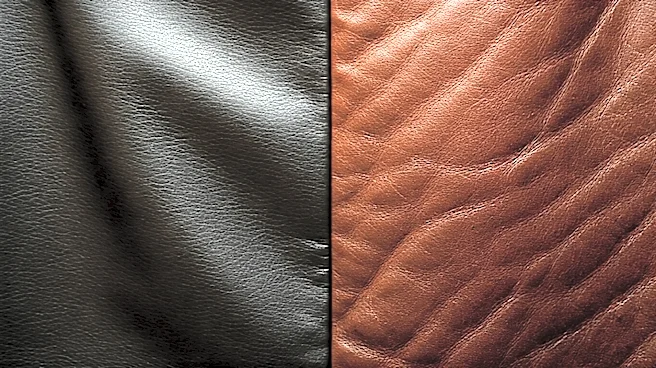
One school of thought, often associated with high-fashion luxury brands, champions a perfectly uniform and unblemished surface. For these designers, the leather jacket is a sleek, modern, and sharp garment. Any natural marking is seen as a defect that detracts from the clean lines and pristine aesthetic. To achieve this look, they use a few techniques. They might select hides from animals raised in controlled environments to minimize scarring. More commonly, they use 'top-grain' or 'corrected-grain' leather. This involves sanding or 'correcting' the outermost layer of the hide to buff away imperfections, then applying a finish and often an artificial grain pattern. The result is a smooth, consistent, and flawless-looking product that aligns with a certain vision of luxury. The argument here is simple: if you're paying top dollar, you deserve perfection.
The 'Character and Authenticity' Camp
On the other side of the aisle are the purists, the designers who believe a leather jacket should wear its history on its sleeve—literally. This camp champions 'full-grain' leather, which is the highest quality grade. Full-grain leather uses the entire hide, including the outer layer with all its natural markings. Nothing is sanded away or corrected. To these designers, a scar or a patch of thicker grain isn't a flaw; it's a mark of authenticity that proves the leather is genuine and not a cheap, plastic-coated imitation. They argue that these 'spots' tell the story of the animal's life and give each jacket a unique, one-of-a-kind character. Furthermore, full-grain leather is the most durable and breathable, and it develops a beautiful 'patina'—a rich, soft sheen that emerges over years of wear. For them, a jacket that looks too perfect is a jacket with no soul.
What This Means For You, The Shopper
This isn't just an abstract debate; it has a real impact on price, durability, and how your jacket will age. A jacket made from corrected-grain leather might look pristine on the rack and could even be less expensive because manufacturers can use lower-quality hides and simply buff out the flaws. However, because the strong top layer has been sanded off, it may be less durable and can be prone to cracking or peeling over time. It will never develop that coveted patina. Conversely, a full-grain leather jacket with visible 'spots' is often more expensive. You're paying for the highest-quality raw material and the fact that the hide was good enough to be used without correction. This jacket will be stiffer at first but will break in beautifully, conforming to your body and developing a patina that is entirely your own. It's an investment piece designed to last a lifetime, with its character deepening as you wear it.