




The Grand, Obvious Tragedies
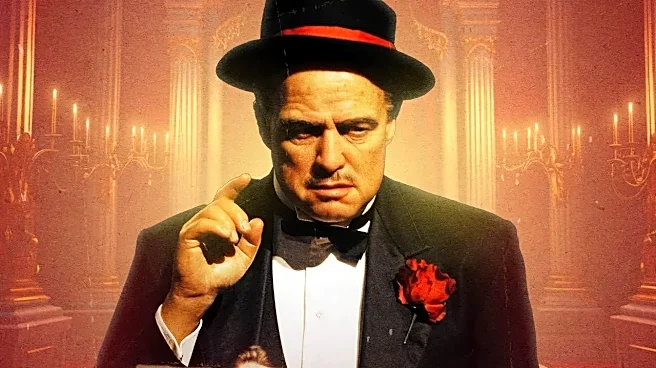
Francis Ford Coppola’s masterpiece is a study in moral decay, contrasting Vito Corleone’s rise to power with his son Michael’s spiritual collapse. The common reading of Michael’s fall focuses on a handful of unforgettable, operatic moments. There’s the
explosive argument with Kay, where she reveals her abortion was a deliberate act to stop bringing his children into a world of violence. There is the devastating betrayal by his brother, Fredo, and Michael’s subsequent decision to have him killed, an act that severs his final tie to his own humanity. And, of course, there is the iconic final shot of Michael sitting alone at Lake Tahoe, powerful and utterly broken, contemplating the empire he built and the family he destroyed to protect it. These are the pillars of his story: a man who, in his quest to secure his family, sacrifices his soul and ends up with nothing but the hollow shell of power. He wins every battle but loses the war for his own life. This interpretation is powerful and true, but it misses the single moment that seals his fate not as a Don, but as a man.
The Quietest Scene in the Film
The scene that truly reshapes our understanding of Michael’s damnation is easy to miss, tucked between the high drama of Kay's departure and Fredo's ultimate fate. It is a moment of profound quietness. After the vicious fight where Michael strikes Kay, she leaves. Sometime later, she secretly visits the children at the Tahoe compound, with Connie’s help. As she says a tearful goodbye to her son, Anthony, Michael appears in the doorway. He doesn’t yell. He doesn’t threaten. He simply stands there, his presence radiating an icy control. Kay leaves, and Michael gently closes the door on her, his face a mask of cold finality. This isn't the forgotten scene, but it sets up the one that is. A bit later, Michael finds Anthony in his room. He tells his son that he can’t take him on his upcoming business trip. Anthony, small and distant, looks at his father, his face betraying nothing and everything. When Michael turns to leave, Anthony doesn’t cry or protest. He just lets him go. It's a simple, silent rejection.
The Rejection That Matters Most
Why does this small, quiet interaction matter more than all the betrayals and murders? Because for the first time, Michael is confronted with a judgment that has nothing to do with the mafia. It’s not about loyalty, business, or power. It is the simple, instinctual recoil of his own child. Anthony’s quiet withdrawal is a verdict on Michael as a father. While Kay’s verbal assault was a conscious rebellion against the Corleone world, Anthony’s is purer. He is a child who senses the coldness and danger emanating from the man who is supposed to be his protector. Michael can command armies of men, manipulate senators, and eliminate his rivals with chilling efficiency. But he cannot command the love or trust of his own son. In that silent moment, Michael, the all-powerful Don, is rendered completely helpless. He can order a man’s death but cannot bridge the emotional chasm that has opened between him and his child. His power is useless here. The door he closed on Kay was a physical act; the distance between him and Anthony is a spiritual one he can never cross.
How It Changes the Ending
This scene reframes Michael's ultimate isolation. The famous final shot, where he sits alone lost in memory, is often seen as the cost of ordering Fredo's death. But viewing it through the lens of Anthony's rejection, his loneliness becomes something deeper. It isn't just punishment for his sins as a gangster; it's the consequence of his failure as a human being. He lost his family not because he was a crime boss, but because the darkness required to be a crime boss consumed the man his children needed him to be. Vito Corleone built an empire and, for all its violence, held his family together through love and tradition. Michael, in trying to legitimize that empire, ruled through fear and control, and it poisoned everything he touched. His enemies never truly defeated him. His wife’s rebellion hurt him. His brother’s betrayal broke him. But it was his son's silent turning away that confirmed his damnation was complete, long before Fredo was taken out on the lake.