




The Conductor in the Control Room
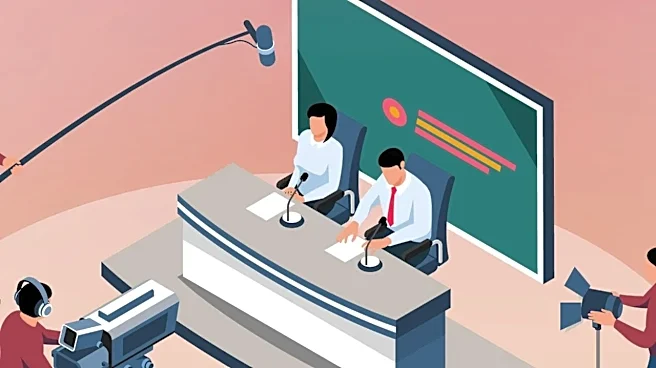
In the nerve center of any live broadcast—a dark room filled with a wall of screens known as the Production Control Room (PCR)—sits the director. They are the conductor of this chaotic orchestra, though they don't hold a baton. Instead, they have a headset
connecting them to dozens of crew members. With every feed from every camera displayed before them, the director is thinking three steps ahead, calling out a stream of commands that will become the show you see at home. "Ready camera three... Take three! Cue graphics... Standby audio..." It's a language of precision and rhythm, where the director's job is to feel the pace of the event and translate that energy into a visual story, all in real time with no second takes.
The Switcher's Digital Ballet
Executing the director's vision is the Technical Director, or TD. This person sits at a massive console that looks like the flight deck of a spaceship, covered in rows of illuminated buttons. When the director calls “Take three,” it’s the TD whose fingers fly across the board to physically switch the live feed from, say, a wide shot of the stage to a tight close-up of a performer. This requires immense concentration and muscle memory. A wrong button press could send the wrong feed to millions of viewers. A hesitation of even half a second can make a cut feel clumsy and unprofessional. It is a digital ballet where timing is everything, and the TD is the lead dancer.
The Guardians of Sound
You might forgive a slightly blurry camera shot, but bad audio can make a broadcast unwatchable. That's where the Audio Engineer, or A1, comes in. This person is responsible for balancing every single sound source. Imagine the complexity of an awards show: dozens of presenters with their own microphones, musical performances with intricate instrumentals, video packages with their own sound, and the roar of the audience. The A1's job is to make sure the presenter's lapel mic doesn't pick up the rustle of their clothes, that a stray cough from the crowd doesn't overpower a quiet, emotional speech, and, above all, to prevent the dreaded "hot mic" moment. It's an invisible art that is only noticed when it goes wrong.
When the Plan Breaks
No amount of planning can account for the unpredictable nature of live events. What happens when a presenter goes off-script, a key piece of equipment fails, or an unexpected, unscripted moment erupts on stage? This is where the production team truly earns its accolades. A great live team has contingency plans for their contingency plans. The director must instantly decide whether to stick with the unfolding chaos or cut away. Do they have a standby camera with a good shot? Can the TD switch to a pre-packaged video file to fill time? Can the A1 quickly mute a problematic microphone? These are the moments, lasting mere seconds, that define an Emmy-caliber production and separate the pros from the amateurs.