

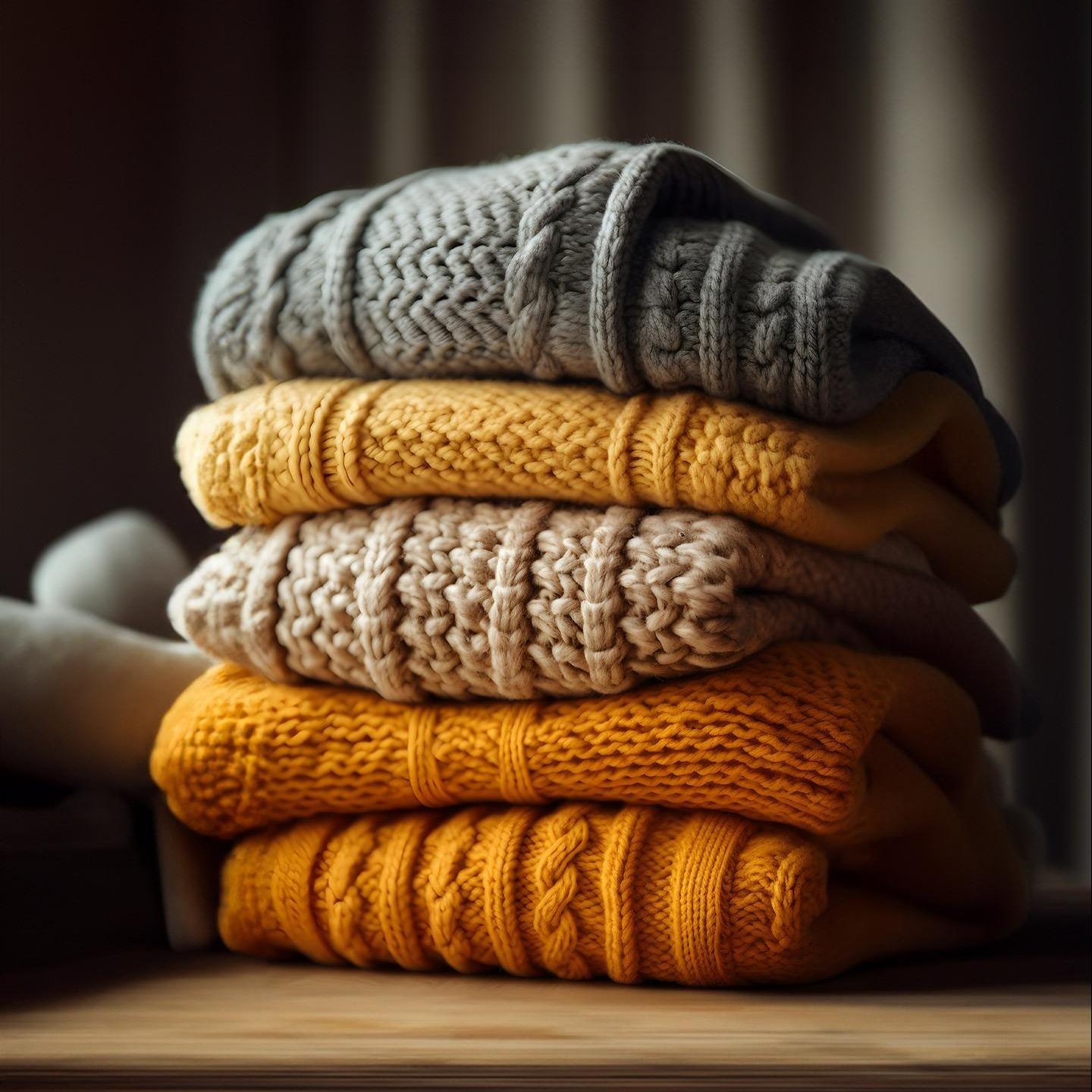



One of luxury’s best-kept secrets is that a high-quality cashmere sweater gets better with age. With proper care, it becomes softer and more personal over time. This magical transformation is called 'blooming,' but it has a dark side.
The Secret Life of Cashmere Fibers
At its best, cashmere
is an investment that pays dividends in softness. That surprising evolution from simply soft to exquisitely plush is a phenomenon known as 'blooming'. When a new cashmere garment is worn and gently washed, the microscopic ends of its fine fibers begin to relax and unfurl. This process creates a delicate, fluffy halo—or bloom—on the surface of the knit, which feels even softer against the skin. It’s a sign that the natural fibers are settling, much like a good pair of leather boots molds to your feet. This blooming is the hallmark of authentic, high-quality cashmere and proof that you’ve invested in a garment that is designed to live and evolve with you.
Why Quality Is All About Fiber Length
Not all cashmere is created equal, and the secret to a beautiful bloom lies in the length of the fibers. Premium, Grade-A cashmere is made from the longest, finest hairs from the soft undercoat of a cashmere goat. These long fibers, typically 34 millimeters or more, are spun into strong, stable yarn. Because they are securely anchored within the knit, they are less likely to break free. When they do bloom, it’s a gentle, uniform process. In contrast, lower-quality cashmere uses shorter, cheaper fibers. These short fibers have many more ends that can easily poke out from the yarn. While a sweater made from these might feel deceptively soft in the store—often due to chemical softeners—that initial feeling is fleeting and quickly gives way to problems.
When Blooming Becomes a Problem
Here’s where things get complicated. The process that causes blooming—fibers working their way to the surface—is also what causes pilling. Pilling is the term for those small, unsightly balls of fluff that appear on sweaters, especially in high-friction areas like under the arms and along the sleeves. A small amount of pilling is completely normal, even on the finest cashmere, especially during the first few wears. This is just the shortest loose fibers exiting the yarn, and once they're gone, the pilling will significantly decrease. The problem arises when the pilling is excessive and continuous. This is a tell-tale sign of low-quality cashmere made from short fibers that will never stop shedding. These pills often cling stubbornly to the fabric, while the pills on high-quality cashmere tend to shed more easily.
How to Properly Care for Your Cashmere
Proper care is essential to encourage a beautiful bloom while minimizing problematic pilling. The golden rule is to be gentle. Hand-washing in cool water with a mild detergent or even baby shampoo is the best method. Never wring or twist the garment; instead, gently squeeze out excess water. To dry, lay the sweater flat on a clean towel, reshape it, and roll the towel up to absorb more moisture before laying it flat on a fresh towel or drying rack away from direct sunlight or heat. It’s also wise to let your sweater rest for a day between wears to allow the fibers to relax. Never hang a cashmere sweater, as this will stretch it out of shape; always fold it for storage.
Removing Pills the Right Way
When pills do appear, resist the urge to pull them off with your fingers, as this can damage the surrounding fibers. The safest and most effective tool is a cashmere comb, a fine‐toothed comb designed to gently lift away pills without harming the knit. Always use it on a dry garment before washing, working on a flat surface and combing lightly in one direction. Battery‐operated fabric shavers can also work but should be used with caution, as they can be more aggressive and potentially create holes if you're not careful. With just a few minutes of care, you can remove the initial pills and help your sweater settle into its long‐term state of softness.