






The Unbeatable Fortress
For decades, the story of the U.S. men’s soccer team was one of quiet futility against its biggest rival, Mexico. The spiritual home of this dominance was Mexico City’s Estadio Azteca. It wasn’t just a stadium; it was a fortress protected by a perfect
storm of obstacles. There’s the punishing 7,200-foot altitude that leaves visiting players gasping for air. There’s the choking smog and midday heat that drains energy. And then there are the 100,000 screaming, fiercely passionate fans creating a wall of sound and intimidation. For nearly half a century of trying, the U.S. national team was spectacularly, almost comically, bad at the Azteca. They’d arrive with hope and leave with a loss. The record was a brutal testament to Mexico’s home-field advantage: in competitive and friendly matches, the U.S. went decades without a single victory. It wasn't just a losing streak; it felt like a curse, a psychological barrier that defined the entire rivalry as a David vs. Goliath story where Goliath always, always won at home.
Finding a Rallying Cry at Home
Unable to conquer Mexico on their turf, the U.S. built its own legend on home soil. A strange and wonderful pattern began to emerge in the early 2000s during World Cup qualifiers played in Columbus, Ohio. In 2001, 2005, 2009, and 2013, the U.S. beat Mexico by the exact same score: 2-0. “Dos a Cero” became the American fans’ defiant chant, a rallying cry that acknowledged Mexico's historical dominance while celebrating a specific, repeatable mastery over them in a place that mattered. It was a clever, slightly smug answer to the Azteca curse. It meant, “You can have your fortress, but here, in the cold of Ohio, the story is different.” This recurring scoreline gave the rivalry a new texture. It was no longer just about U.S. suffering; it was about landing a powerful counterpunch, even if they couldn't land the knockout blow in Mexico.
The Day the Curse Finally Cracked
On August 15, 2012, the impossible happened. In a friendly match—meaning no major trophy was on the line—the USMNT stepped onto the grass at the Azteca. The usual narrative was expected to unfold. But in the 80th minute, with the score tied 0-0, a U.S. player named Michael Orozco Fiscal scored a scrappy, improbable goal. The U.S. held on to win 1-0. It was their first-ever victory at the Azteca. Yes, it was “just a friendly.” But in sports, psychology is everything. That win didn't erase the decades of losses, but it shattered the myth of invincibility. It proved that a U.S. team *could* win there. The curse wasn't broken in a dramatic final, but in a gritty, workmanlike game that fundamentally changed the team’s belief system. The psychological barrier was gone.
A New Era and a Shift in Power
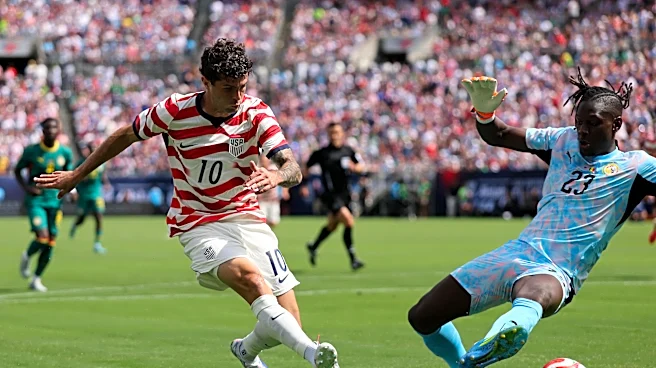
That 2012 win was a tremor. What followed in recent years has been an earthquake. A new generation of American stars, playing for some of the biggest clubs in Europe—like Christian Pulisic, Weston McKennie, and Gio Reyna—grew up knowing the Azteca wasn't invincible. They carry a different swagger. This confidence has translated into tangible results that go beyond a single friendly. The U.S. has since earned hard-fought draws in World Cup qualifiers at the Azteca, and more importantly, they have started dominating Mexico in championship finals played on American soil. The USMNT beat Mexico in the finals of both the inaugural CONCACAF Nations League and the Gold Cup in the summer of 2021, signaling a major power shift in North America. The rivalry is no longer about a plucky U.S. team hoping to survive; it’s about two regional titans clashing for supremacy, with the U.S. now often having the upper hand.