
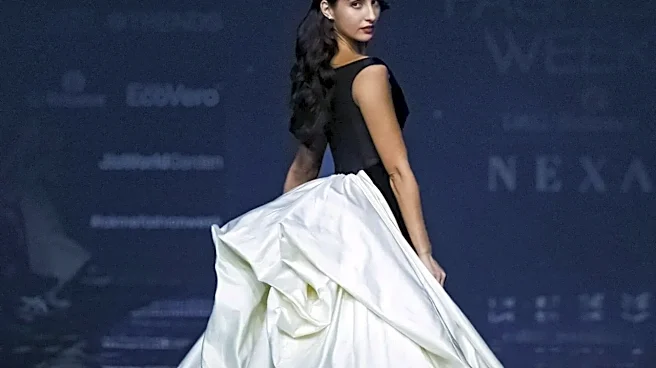
The Initial Spark: Designer Meets Stylist
Weeks or even months before New York Fashion Week, the process begins not with a comb, but with a conversation. A designer will meet with a lead hairstylist to translate the collection's entire mood into a hairstyle. This isn't just about making hair look
good; it's about storytelling. The designer shares their vision through mood boards, fabric swatches, and key phrases. Is the collection's muse a 1950s Hollywood starlet, a rebellious punk, or a futuristic android? The lead stylist's job is to absorb this abstract concept and begin brainstorming how to express it through hair. They must consider how the hair will interact with the clothes, the lighting, and the overall narrative of the show. This collaborative phase is purely conceptual, but it lays the foundation for every decision that follows.
The Lab: Perfecting the Look in a Hair Test
The most critical and least glamorous phase is the 'hair test'. This is where ideas meet reality. The lead stylist, along with a few assistants and a model, will spend hours in a studio trying to bring the concept to life. This is a period of intense experimentation. They might try dozens of products, techniques, and tools, from high-tech flat irons to something as simple as a toothbrush for taming flyaways. Will the hair hold up under hot lights? Does the style work on different hair textures? The stylist takes countless photos, sending them to the designer for feedback. This back-and-forth continues until they land on a definitive look. Often, what appears simple on the runway—like a 'wet look' or 'undone' waves—is meticulously engineered during the hair test to be perfectly imperfect.
The Blueprint: Creating a Replicable Guide
Once the final look is approved, the lead stylist's job shifts from artist to general. They must create a foolproof method for their team of 10, 20, or even 30 backstage stylists to replicate the look identically on every model. This involves creating a 'hair bible'—a detailed breakdown of the style with step-by-step instructions, specific product lists, and photos from every angle. Some lead stylists email this guide to their team the night before. On the day of the show, just before the models arrive, the lead will demonstrate the entire process on one model from start to finish. This ensures that every member of the team knows exactly which products to use, in what order, and what the final result should look like, ensuring total consistency across the board.
Show Day: An Orchestra of Controlled Chaos
Backstage at a fashion show is an electric, high-pressure environment. Models often arrive late from other shows, sometimes with completely different hairstyles that need to be undone and redone in minutes. The styling team works with intense speed and precision, each person assigned to a model, executing the pre-planned look. Time is the biggest luxury and the biggest constraint; stylists may only have 15 to 20 minutes per model. They rely on their kits, stocked with every imaginable tool, from various sized curling irons to different colors of hair extensions and pins. The lead stylist acts as the conductor, floating between stations to quality-check each look, making micro-adjustments to ensure every head of hair is a perfect echo of the original vision before the first model steps onto the runway.