




An Autumnal Icon By Default
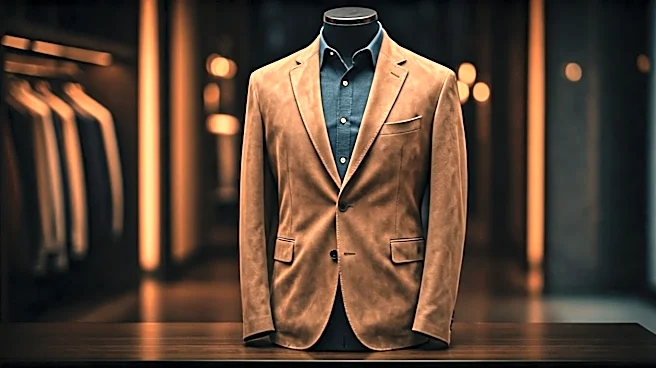
Before its reinvention, the suede jacket lived in a specific part of the American man’s imagination. Think Robert Redford in the ‘70s, rugged and impossibly cool against a backdrop of turning leaves. It was a piece defined by its texture—soft, napped,
luxurious—and its traditional context. It was a ‘transitional’ jacket, perfect for the crisp, dry days of October or the first thaw of April. Its perceived fragility, especially a mortal fear of rain, and its insulating weight confined it to these sartorial guardrails. It was seen as too heavy for summer heat and not substantial enough for a winter freeze. It was a beautiful, but limited, specialist player in the menswear game, brought off the bench for just a few months a year.
The Florentine Proving Ground
Enter Pitti Uomo. Held twice a year in Florence, Italy, it’s officially a menswear trade show where brands present upcoming collections. But its true cultural power now lies outside the exhibition halls. The plaza in front of the Fortezza da Basso transforms into the world's most influential runway: a peacock-filled stage for menswear editors, buyers, and influencers. These men, known as the 'Pitti Peacocks,' compete for the lenses of street style photographers. In this high-stakes environment, simply looking good isn’t enough; you have to look interesting, innovative, and even a little defiant. The goal is to craft a look so compelling it gets photographed and beamed across the globe, setting the tone for what men will want to wear in six to twelve months. It’s a laboratory where style rules are stress-tested in real-time.
The Summer Suede Revolution
It was in the crucible of a blistering Florentine June that the suede jacket’s transformation began. To stand out, attendees started wearing items in unconventional ways. They co-opted the traditionally autumnal suede jacket and adapted it for the heat. This wasn’t the heavy, shearling-lined trucker of fall folklore. This was a new breed: unlined, tissue-light goat suede bombers and unstructured blazers. They were worn not as outerwear, but as a substitute for a sport coat or a cardigan. The key was in the styling. Men wore them open over a simple white t-shirt or a linen shirt, sleeves pushed up to the elbows. They were paired with lightweight trousers, crisp white denim, and sockless loafers. The jacket provided texture and a dash of color—tobacco, sand, olive—without adding unbearable warmth, proving that with the right material and styling, suede could handle the heat.
From Florence to Your Closet
This act of sartorial rebellion didn't stay in Florence. Thanks to street style photographers and the rise of Instagram, these images were instantly accessible to a global audience. The message was clear: the old rules were gone. Suddenly, blogs, magazines, and social media feeds were filled with examples of men looking effortlessly cool in suede under the summer sun. Brands and retailers took note. Seeing the organic demand created on the streets of Pitti, they accelerated production of lighter, unlined, and more versatile suede jackets. What was once a niche, high-fashion move became a viable commercial product. The influence of Pitti Uomo served as a proof of concept, showing brands that the market was ready for a four-season suede hero.
The New Rules for a Modern Classic
The legacy of Pitti's influence is a jacket liberated from the closet for nine months of the year. For spring, you can wear a classic tobacco trucker over a light sweater. In summer, take the Florentine approach: an unlined, lightweight bomber in a sandy hue over a tee with linen pants. For fall, it’s back to its roots—a rich brown or navy suede jacket layered over a flannel or turtleneck. And for winter, it finds a new role as a sophisticated layering piece. A thin suede jacket, like a Valstarino, can be worn under a heavy wool overcoat, providing an extra layer of insulation and a pop of texture when you're indoors. It's no longer just an outer layer, but a versatile component in a modern wardrobe.