





A Fortress Turned Prison
The entire premise of a holiday homecoming rests on the idea that home is a fortress against the outside world. It's a place of comfort, decorated in warm lights and filled with familiar faces. 'Black Christmas' introduces us to this ideal within a sorority
house, where a group of young women are celebrating before leaving for winter break. Director Bob Clark masterfully sets a cozy, festive scene, complete with Christmas carols and yuletide decorations, creating a deliberate contrast with the horror that unfolds. The film brilliantly weaponizes this setting. The sorority house, a symbol of sisterhood and a refuge from the world, is violated from the very beginning. The audience knows the killer is already inside, making every locked door and window a terrifying irony. The safety is an illusion; the fortress has become a prison, and the characters are trapped inside with the monster.
The Call Is Coming From Inside the House
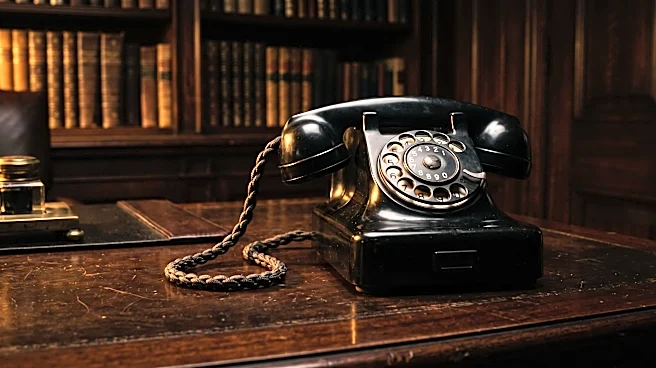
Long before it became a famous trope, 'Black Christmas' pioneered the now-legendary horror concept: the threatening calls are originating from within the house itself. Inspired by the urban legend 'The Babysitter and the Man Upstairs,' the film was the first to bring this terrifying scenario to the screen. The killer, known only as 'Billy,' torments the sorority sisters with a series of obscene and unhinged phone calls. His voice, a chaotic jumble of screams, whispers, and multiple personalities, is more terrifying than any masked killer's silence because it's so deeply unhinged and human. When the police finally trace the calls, the reveal that he's in the attic doesn't just endanger the characters—it obliterates the audience's sense of security. The threat isn't an external force to be kept out; it's an internal poison that has already seeped in.
A Final Girl Who Defies Expectation
At the heart of the film is Jess Bradford (Olivia Hussey), who stands as a remarkably progressive protagonist for 1974 and a prototype for the 'final girl' trope. However, unlike the virginal, often passive final girls who would follow in the slasher boom, Jess is complex and assertive. The film's most radical element is its subplot involving Jess's unwanted pregnancy. She is resolute in her decision to have an abortion, despite the furious, manipulative protests of her boyfriend, Peter. This wasn't just a taboo topic for the era; it established Jess as a woman in control of her own body and future, refusing to adhere to the traditional path of marriage and motherhood. Her fight for survival becomes a fight for her own agency against multiple forms of male aggression, making the violation of her home feel even more pointed.
No Comfort, No Closure
Perhaps the most subversive element of 'Black Christmas' is its bleak, ambiguous ending. After a harrowing battle, Jess believes she has killed the intruder, who she mistakes for her aggressive boyfriend, Peter. The police arrive, sedate her, and leave her to rest—alone, in the now-silent house. But the audience knows the truth: Peter was not the killer. As the camera pans up to the attic, we see the real murderer is still there, looking down at his final victim. The phone begins to ring again, and the film cuts to black, leaving Jess's fate terrifyingly unresolved. This refusal to provide closure was groundbreaking. It denies the audience the catharsis of seeing the monster vanquished and safety restored. The authorities are incompetent, the wrong man is blamed, and the evil remains, hiding in the one place she should be safe.