




The Timeless Allure of a Classic Chain
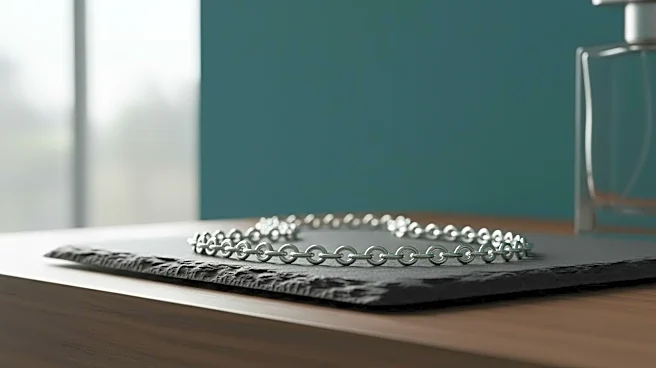
The Rolo chain, with its uniform, interlocking round links, is a marvel of versatile design. It’s strong enough to support a heavy pendant yet stylish enough to be worn on its own. Sometimes called a Belcher chain, its history dates back centuries, proving
that its clean, geometric appeal is truly timeless. The beauty of the Rolo lies in its simplicity. Each link is identical, creating a pleasing symmetry and a chain that lies comfortably against the skin without kinking. This makes it a go-to choice for everything from delicate necklaces to chunky bracelets. But in that sea of perfect circles, the difference between a chain that lasts a lifetime and one that breaks in a month is nearly microscopic.
Look Closer: The Secret Is in the Seams
Here's the hidden detail: the quality of a Rolo chain is revealed where each individual link is joined. On a mass-produced, low-quality chain, these links are often just pressed shut. If you look closely, you can see a tiny gap or seam. This is a major weak point. That small opening is prone to snagging on a sweater or, under enough pressure, pulling apart completely. True craftsmanship, however, demands that every single link be soldered closed. This is a labor-intensive process where a jeweler uses heat and a small amount of metal alloy (solder) to permanently fuse the seam on each link. The result is a perfectly seamless circle.
From Weak Point to Mark of Quality
A soldered link is exponentially stronger than an unsoldered one. It transforms the weakest part of the link into a point of strength, distributing stress evenly around the entire circle. In a high-quality piece, this solder joint is then polished so perfectly that it becomes invisible to the naked eye. You can run your fingernail over it and feel nothing but a smooth, continuous surface. This invisible detail is the hallmark of superior jewelry making. It signifies that a craftsman invested significant time and skill into ensuring the chain’s durability and longevity. Mass-production skips this step to save time and money, which is why cheap chains break so easily.
How to Be a Discerning Chain Detective
Now that you know the secret, you can't unsee it. When shopping for a chain, don't just look at the shine; become a quality detective. Use your phone's camera to zoom in on the links. Can you see a tiny slit or gap on each one? If so, it's likely an unsoldered, machine-made chain. Next, feel its weight. High-quality chains made from solid gold or silver will have a satisfying heft, whereas hollow or plated chains feel noticeably lighter. Also, check for uniformity. The links should all be the exact same size and shape. Finally, inspect the clasp. It should be substantial, operate smoothly, and be securely attached with a soldered ring—not a flimsy, open one.