


First, What Defines Hooded Eyes?
Before diving into technique, it's important to understand the canvas. Hooded eyes are characterized by an extra layer of skin that droops from the brow bone over the eyelid, partially or fully obscuring the crease. When the eye is open, this "hood" can make
the mobile lid look smaller and cause makeup to smudge or transfer. It's a common and beautiful eye shape, but it presents a few unique challenges: eyeshadow can vanish when you open your eyes, eyeliner can get distorted in the fold, and mascara often transfers onto the brow bone. The goal isn't to "fix" your eye shape, but to learn techniques that work with it to make your eyes pop.
The Hidden Step: Creating a New Canvas
The single most transformative secret for hooded eyes isn't a product; it's a mental shift. Instead of working with your natural, hidden crease, you must create a new, visible one. Professionals don't fight the hood; they build a new structure above it. This is the “hidden step” in its entirety: accepting that most of the artistry will happen above your natural fold, on the hood itself. This means applying and blending color with your eyes open and looking straight ahead into a mirror. This allows you to see exactly where the makeup will be visible, creating a lifting effect instead of placing color in a crease that disappears the moment you stop looking down.
It Starts with the Base: Strategic Priming
For hooded eyes, primer isn't just about making shadow last longer; it's a non-negotiable step for preventing transfer. Because the skin of the hood rests on the mobile lid, it creates a warm, friction-prone environment perfect for smudging. Use a dedicated eyeshadow primer and apply a thin layer from your lash line all the way up to your brow bone. This creates a tacky, uniform base. The crucial second part of this step is to lightly set the primer with a translucent powder or a nude eyeshadow. This sets the base, absorbs excess oil, and creates a perfectly smooth, non-greasy surface, making blending easier and ensuring your hard work doesn't melt into the fold.
Look Straight Ahead: Mapping Your New Crease
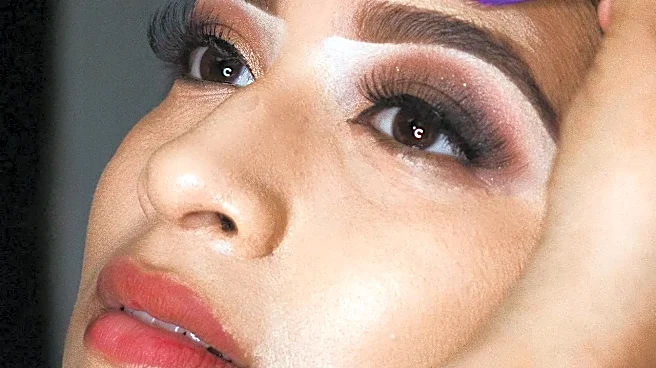
This is where the magic happens. A common mistake is applying a dark crease color with the eye closed, placing it right into the natural fold. On a hooded eye, this color will completely vanish when you open your eye. Instead, keep your eye open, relax your brow, and look directly into the mirror. Take a matte, neutral eyeshadow on a smaller blending brush and place the color on the hood itself, just above where your natural crease is. This is your new, visible crease. Use small, controlled motions to build up the color, creating the illusion of depth and pushing the puffy part of the hood back visually. This technique ensures your contour is always visible, effectively lifting the entire eye area.
Finishing Touches: Liner and Shimmer Reimagined
The same "eyes-open" logic applies to eyeliner and shimmer. For a winged liner, trying to draw a straight line with your eye closed will result in a distorted, crooked shape when the eye is open. Instead, look straight ahead and map out the wing first, connecting it to your lash line afterward. Many find that a thin line or simply tightlining—applying liner to the upper waterline—is more effective at defining the eye without taking up precious lid space. When it comes to shimmer, which can emphasize texture, apply it strategically. Pat a pop of a light-reflecting shadow onto the most visible part of your mobile lid (often toward the inner half) and add a dot to the inner corner to open up the eyes. Avoid placing heavy shimmer all the way up to your new, higher crease, as this can make the hood appear more prominent.