




The Anatomy of a Daydream
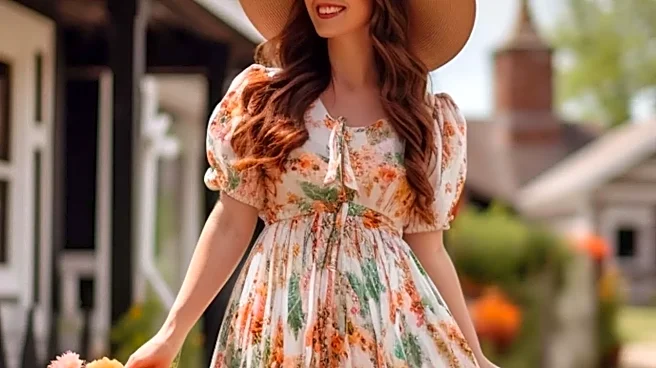
Close your eyes and picture “Cottagecore.” You’re likely imagining a long, flowing dress with a high neckline, billowy sleeves, and a delicate floral print. It’s the kind of garment you’d wear while baking sourdough, tending to a garden, or reading in a sun-drenched
meadow. This silhouette, often called a prairie or nap dress, has become the visual shorthand for an aesthetic built on nostalgia and a desire for a simpler, more mindful existence. The style feels wholesome and historic, evoking a romanticized vision of 19th-century rural life. But while the inspiration might feel Victorian, the direct stylistic ancestor of today's ubiquitous dress is much closer than you think. Its most famous features were resurrected from the 1970s.
Meet the Gunne Sax, the 1970s Original
The Cottagecore dress is a direct descendant of the prairie dresses that swept through American fashion in the late 1960s and 1970s. This earlier wave was spearheaded by brands like Laura Ashley and, most famously, Gunne Sax. Founded in San Francisco in 1967, Gunne Sax—a playful name derived from “gunny sack”—was taken over by designer Jessica McClintock in 1969 and transformed into a phenomenon. McClintock’s designs were a romantic mashup of historical details: high collars, corset-like lacing, long sleeves, and tiered, ruffled skirts, all rendered in calico prints and trimmed with lace. These dresses, sometimes called “granny dresses,” offered a stark alternative to the decade’s other dominant trends, like the miniskirt. They were a rejection of sleek modernism in favor of something softer, more nostalgic, and deeply romantic.
A Fashion for Anxious Times
The 1970s prairie revival wasn't just a random fashion moment; it was a response to the era's cultural climate. The hippie counterculture had already popularized a return to historical and handmade styles as a rejection of mainstream consumerism. For many young people disillusioned by the Vietnam War, political turmoil, and economic uncertainty, the prairie dress symbolized a retreat to a perceived simpler, more authentic American past. It was tied to the back-to-the-land movement and a romanticized fantasy of pioneer life, fueled by popular media like the TV show “Little House on the Prairie.” This modest, historical silhouette was seen as liberating—a choice made for personal comfort and expression, rather than to cater to the male gaze. It was fashion as a form of escapism.
Same Silhouette, New Anxieties
Fast forward fifty years, and the same silhouette has re-emerged for strikingly similar reasons. The modern Cottagecore movement, which gained massive traction during the COVID-19 pandemic, is also a response to a world that feels overwhelming. Instead of war and recession, the anxieties are digital burnout, climate change, and political polarization. The internet, while enabling the trend's spread, is also the very thing many are seeking refuge from. The prairie dress once again offers a comforting escape. It represents a tangible connection to activities like baking, gardening, and crafting—slow, mindful pursuits that feel grounding in a fast-paced digital world. The aesthetic provides a sense of control and self-sufficiency when the outside world feels chaotic. In both the 1970s and the 2020s, the dress is less about historical accuracy and more about wearing a feeling: the feeling of safety, simplicity, and romantic idealism.