




The Peril of the Live-Action Remake
Disney’s live-action remakes are a cottage industry with a famously mixed track record. For every thoughtful reinterpretation like Cinderella, there's a film like 2019's The Lion King, which was criticized for its photorealistic yet emotionally vacant
style. The problem is often one of translation. Animation allows for a perfect, fluid harmony between character expression, fantastical action, and musical swell. A cartoon lion cub can emote with heartbreaking clarity; a photorealistic CGI lion cub just looks like a lion cub. When adaptations prioritize visual replication over emotional rhythm, they risk losing the soul of the original. The result can feel less like a movie and more like a high-budget museum exhibit, a collection of beautiful but static moments. This is the theme park ride trap: a sequence of impressive set pieces that thrill in the moment but fail to build a cohesive, moving narrative.
Moana's Unique Challenge
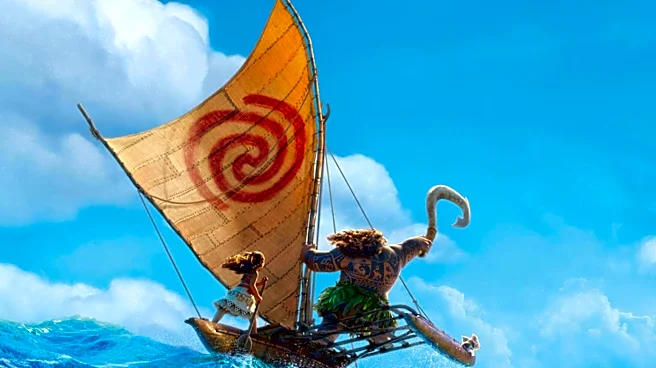
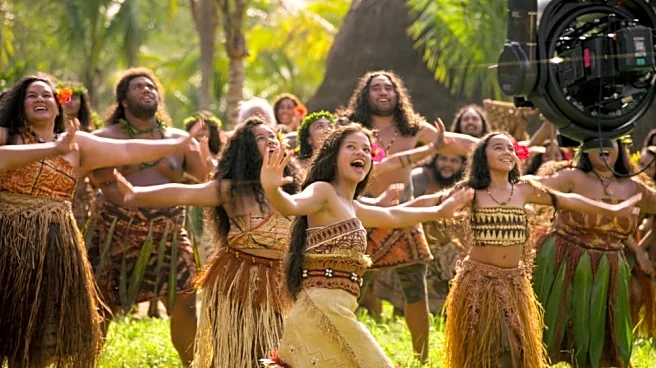
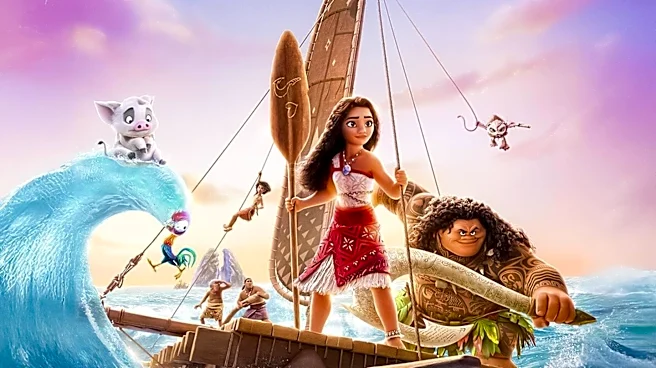
The 2016 animated Moana is a masterclass in kinetic storytelling. Its world is constantly in motion: the ocean is a living character, Maui’s tattoos dance across his skin, and action sequences are breathtakingly imaginative. Consider the Kakamora attack, a Mad Max: Fury Road-style chase on the high seas with coconut-armored pirates. In animation, it’s a delightful, energetic sequence. In live-action, without the right pacing, it could easily become a disorienting CGI mess. Likewise, musical numbers like Dwayne Johnson's “You’re Welcome” and Jemaine Clement’s “Shiny” are defined by their surreal, physics-defying visuals. A direct copy would look bizarre. The challenge for the live-action film, which stars Johnson reprising his role as Maui and Catherine Laga'ia as Moana, is not just to recreate these moments, but to find a new cinematic language for them. It needs a beat, a tempo, and a flow that feels both grounded in reality and true to the mythical spirit of the story.
The 'Hamilton' Solution
Fortunately, Disney didn't just hire a director; it hired an expert in rhythm. Thomas Kail is best known for directing Hamilton, a stage production that is the literal embodiment of rhythmic storytelling. Kail’s work, both on stage and in the filmed Disney+ version, demonstrates a genius for managing pace, energy, and focus in a whirlwind of overlapping songs, dialogue, and action. He knows how to make a dense, complex story feel propulsive and clear. He understands that the spaces between the notes are as important as the notes themselves. Kail’s direction of Hamilton involved orchestrating a constant flow of information and emotion, ensuring the audience was never lost, even as the narrative rewound, fast-forwarded, and jumped between perspectives. This is precisely the skill set needed to prevent Moana from becoming a collection of disjointed adventures.
Finding the Film's Heartbeat
Instead of trying to replicate the impossible elasticity of animation, Kail’s background suggests he will build the film around a different kind of pulse—one rooted in character and performance. His style is collaborative and service-oriented, focused on making the story and its performers shine. The goal won't be to make a coconut crab look exactly like a real crab singing a glam-rock anthem, but to find the emotional truth of that scene and stage it in a way that serves the film's overall tempo. It’s about knowing when to go big for a show-stopping number and when to pull back for a quiet moment between Moana and Maui on the boat. Film editing is often described as creating a rhythm through the length and sequence of shots. It’s a process of creating patterns, building and releasing tension, and guiding the audience’s emotional journey. By applying a theatrical sense of pacing—where every entrance, exit, and musical beat serves a purpose—Kail can stitch the epic moments together with the intimate ones, creating a single, harmonious adventure.