




The Dawn of Recent-Nostalgia Cinema
For years, Hollywood's remake strategy relied on a simple formula: wait 20 to 30 years for a generation to grow up, get sentimental, and want to introduce a childhood classic to their own kids. It worked for 'The Lion King,' 'Beauty and the Beast,' and 'Aladdin.'
But the 'Moana' remake, scheduled for a July 2026 release, is different. It’s not targeting millennials’ fuzzy memories of VHS tapes; it’s targeting the generation that just finished streaming the original on Disney+ last week. This is “recent-nostalgia cinema,” a new and aggressive business model built on a compressed timeline. The strategy isn’t about reviving a dormant property; it’s about reinforcing an active one. The 2016 'Moana' remains one of the most-streamed movies in the U.S., meaning Disney is remaking a film that never actually went away. It’s a calculated risk that assumes an audience’s affection for a story is so strong, they’ll pay to see a nearly identical version with real people instead of animated characters.
The Billion-Dollar Gamble
The financial logic behind Disney's live-action remakes has been hard to argue with, as many have grossed over a billion dollars. These films are seen as safe bets in an industry terrified of expensive flops. They leverage pre-existing fanbases and minimize marketing risks. The 'Moana' remake, with an estimated budget of $200-250 million, follows this playbook. However, it also introduces new variables. Can nostalgia be manufactured this quickly? Critics of the trend argue that it feels creatively bankrupt, a sign that studios are running out of both new ideas and old classics to reboot. The first wave of reactions to the 'Moana' remake has been deeply divided, with many critics calling the film a soulless, shot-for-shot rehash that fails to recapture the magic of the animated original. This criticism suggests a growing fatigue with the remake formula, especially when the source material feels so contemporary.
The Rock and a New Face
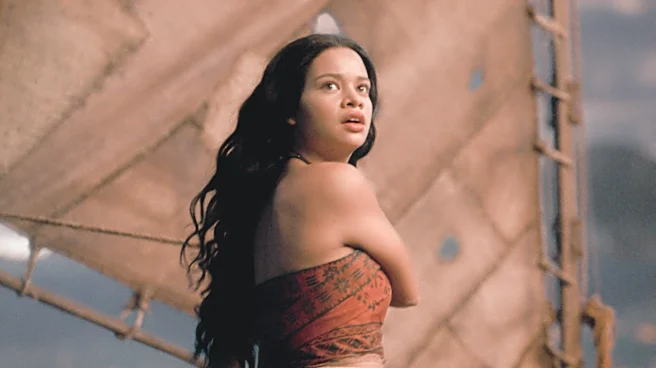
A key part of the strategy is the casting. Dwayne “The Rock” Johnson, a producer on the film who voiced the demigod Maui in 2016, reprises his role, lending his immense star power and a personal connection to the story. In a recorded message, Johnson emphasized the story's connection to his own culture, calling it an emblematic tale of his people's grace and strength. The original voice of Moana, Auliʻi Cravalho, serves as an executive producer, passing the torch to 17-year-old Australian newcomer Catherine Laga’aia. This blend of the familiar and the new is crucial. Johnson provides continuity, while Laga’aia offers a fresh face for audiences to embrace, preventing the film from feeling like a pure retread. Yet, some early reviews have criticized Johnson’s on-screen performance, suggesting that his live-action portrayal doesn't capture the same energy as his animated one and that he is outshined by his co-star.
A Bellwether for Hollywood's Future
Ultimately, the success or failure of the live-action 'Moana' will send a powerful signal to the rest of Hollywood. If the film is a box-office smash, it will validate the recent-nostalgia model and likely accelerate the trend. We could see remakes of 'Tangled,' 'Frozen,' and 'Zootopia' greenlit before they even hit their 15th anniversaries. The practice would shift from being a special event to a standard part of a franchise's lifecycle management, much like sequels and merchandise. If it underperforms or faces significant audience backlash, however, it could serve as a warning that there is, in fact, a limit to how quickly nostalgia can be mined. It might force studios to reconsider their IP strategy and acknowledge that even the most beloved stories need time to breathe before being told again. The 'Moana' remake isn’t just another movie; it’s a referendum on how we value and consume cinematic stories in the streaming era.