




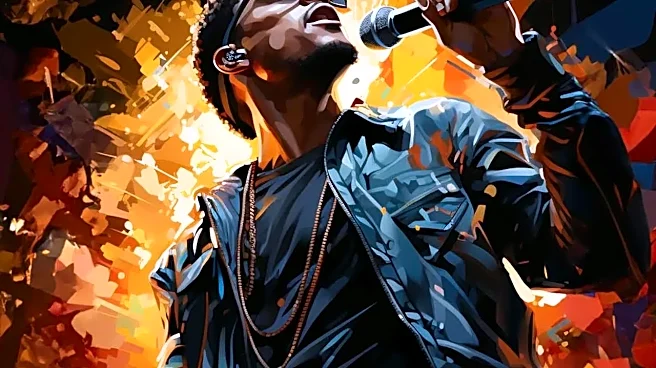

The Peril of the All-Star Medley
On paper, the multi-artist tribute is a can’t-miss formula. Gather a dozen beloved stars to honor a legend, stitch their biggest hits together, and let the nostalgia flow. In practice, it’s often a logistical and creative nightmare. Performers are shuffled
on and off stage like PowerPoint slides, each delivering their 45-second snippet in a vacuum. The energy repeatedly stalls and restarts, transitions are awkward, and the camera work becomes a frantic game of “find the person singing.” The result can feel less like a cohesive celebration and more like a series of disconnected karaoke cameos, leaving the audience with a sense of whiplash rather than wonder. This is the default mode for so many live TV medleys, a format that prioritizes efficiency over feeling, failing to capture the very spirit of the music it aims to honor.
Case Study: The Stage as a Cypher
The VH1 Hip Hop Honors tributes consistently defied this trend by embracing a core principle of the culture itself: the cypher. Take, for example, the legendary tributes to icons like Big Daddy Kane or Slick Rick, which brought together a sprawling cast of MCs from different eras. Instead of having artists appear and disappear, the stage was treated as a living, breathing space. Performers remained visible even when they weren't the focus, vibing in the background, ad-libbing, and passing the metaphorical mic. The blocking wasn’t a rigid sequence of entrances and exits; it was an organic flow. One artist's verse would bleed into the next, with performers physically interacting and handing off the spotlight. This created a sense of continuous, shared energy, making the audience feel like they were witnessing a genuine, one-night-only block party rather than a meticulously rehearsed television segment.
Lesson 1: Direct for Energy, Not Just Coverage
A standard live broadcast is built on coverage: the wide shot to establish, the medium to frame the action, and the close-up for emotion. But the best hip-hop tributes teach directors to follow the energy first. Instead of cutting to a static close-up of a rapper, the camera would often move with them, using a Steadicam to weave through the crowd of performers on stage. The vision mixer would cut on the beat, matching the percussive energy of the track, not just reacting to whoever was about to sing. This approach treats the entire stage as the main character. When Busta Rhymes exploded with energy during the Slick Rick tribute, the direction wasn't just about getting a clean shot of his face; it was about capturing how his energy radiated and affected everyone else on stage. It’s a shift from documenting a performance to amplifying its vitality.
Lesson 2: Embrace Planned Spontaneity
The magic of these tributes lies in moments that feel unscripted, even when they are meticulously planned. The director and producers create a framework where genuine interactions can happen. By keeping artists on stage together, you allow for the possibility of a shared laugh, an impromptu dance, or a nod of respect between a veteran and a newcomer. These are the moments that make live TV feel truly live. A director’s job isn't just to choreograph every move but to build a space that encourages authenticity and then be ready to capture it. It requires trusting the artists to understand the assignment and co-create the narrative on the fly. This philosophy extends beyond music; imagine a political town hall or a live debate blocked to encourage interaction rather than a series of isolated podium speeches. The principle is the same: create the conditions for genuine moments to erupt.
Lesson 3: The Set Is Part of the Story
Many of the most memorable Hip Hop Honors events transformed the entire venue. For its tribute to the '90s, the production team turned a Hollywood backlot into a classic Brooklyn street scene, complete with graffiti, brownstone facades, and newspaper boxes. The performance wasn't happening on a stage; it was happening in a world. This immersive approach informed the blocking. Artists could interact with the environment, leaning against a prop car or gathering on a stoop, making their performances feel grounded and cinematic. It breaks the fourth wall of the sterile television studio. For directors, it’s a reminder that the environment itself is a tool. A dynamic set gives performers more to work with and provides the camera with a richer visual story to tell, moving beyond the flat, LED-screen-heavy backdrops that have become the default for so many modern broadcasts.