




Violent Night (2022)
The comparison here is almost too easy, blending Christmas action with a home invasion plot. In Violent Night, a jaded Santa Claus (played by David Harbour) finds himself in a wealthy family's compound during a heist. When the thieves take the family hostage,
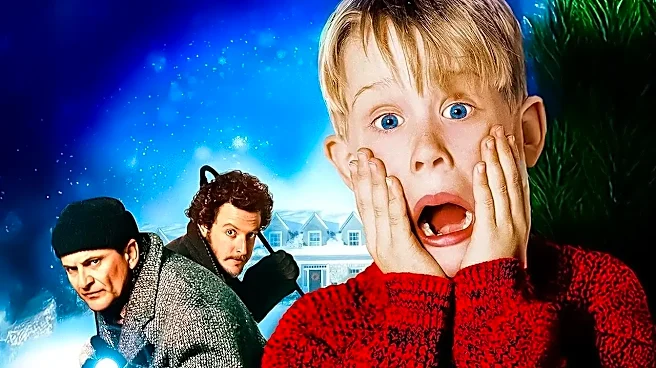
it's up to Santa to save them, specifically the young, true-believing daughter. Critics immediately pointed to the Home Alone influence, particularly in a sequence where the young girl sets up a series of surprisingly brutal booby traps for the invaders. Where Kevin McCallister's traps were cartoonish, these are played with gory realism, leading many to call it a bloody, R-rated Home Alone for adults. It captures the same spirit of a seemingly outmatched hero using household items and ingenuity to fend off criminals, just with a much higher body count.
Becky (2020)
Take the resourceful kid from Home Alone, replace the bumbling burglars with escaped neo-Nazi convicts, and you get Becky. The film follows a grieving and rebellious teenager, played by Lulu Wilson, who is at her family's lake house when convicts invade looking for a key. What follows is not a comedic romp but a brutal game of survival. Critics described it as a nightmarish, R-rated spin on the Home Alone premise. Becky, like Kevin, uses her knowledge of the terrain and whatever she can find—from colored pencils to a motorboat—to exact vicious revenge on the intruders. The film flips the wish-fulfillment fantasy on its head, exploring the genuine rage and trauma that would fuel such a violent defense. Kevin James's shocking turn as the menacing villain further cements the film's departure from family-friendly territory.
Better Watch Out (2016)
This film starts like a typical home invasion movie but quickly reveals a sinister twist that makes the Home Alone comparison even more fascinating. A 12-year-old boy, Luke, and his babysitter are seemingly terrorized by intruders on Christmas Eve. However, the film cleverly subverts expectations by revealing that the home invasion is a hoax orchestrated by Luke himself to impress his sitter. When his plan goes wrong, his psychopathic tendencies emerge, leading to a deadly hostage situation. Critics called it a malicious and shocking deconstruction of Home Alone, examining the twisted psyche it would take to actually build those traps. One of the film's most talked-about scenes is a direct, and gruesome, homage to Kevin's iconic paint can trap, showing what would really happen.
The Aggression Scale (2012)
Often explicitly described as "Home Alone with more death" or an "ultra-violent Home Alone," this low-budget thriller takes the core concept into much darker territory. The story centers on Owen, a non-verbal teenager with a history of violent behavior, who has just moved to a new home with his blended family. When a group of mob enforcers shows up to retrieve stolen money, they kill the parents, leaving Owen and his stepsister to fend for themselves. Owen, using his knack for creating makeshift weapons, turns the tables on the hardened criminals with brutal efficiency. Critics noted that the film reimagines Home Alone's slapstick violence as genuinely brutal, stripping away the comedy to reveal the disturbed nature of its young protagonist. It's a gritty, serious take on what happens when a resourceful kid fights back.
30 Minutes or Less (2011)
While not a direct home invasion story, this action-comedy earned its Home Alone comparisons for a different reason: the bumbling, wannabe-criminal antagonists. The plot follows a pizza delivery guy (Jesse Eisenberg) who is forced to rob a bank while wearing a bomb vest. The culprits are two dim-witted slackers (Danny McBride and Nick Swardson) who believe they are criminal masterminds but are comically inept. Critics drew parallels between their poorly planned schemes and frequent, painful failures and the slapstick suffering of Home Alone's Wet Bandits. The dynamic between the two duos—one clever and resourceful under pressure, the other hopelessly out of their depth—mirrors the cat-and-mouse game between Kevin and the burglars, focusing on the comedic ineptitude of the villains rather than the traps themselves.