






The Spielbergian Sense of Wonder
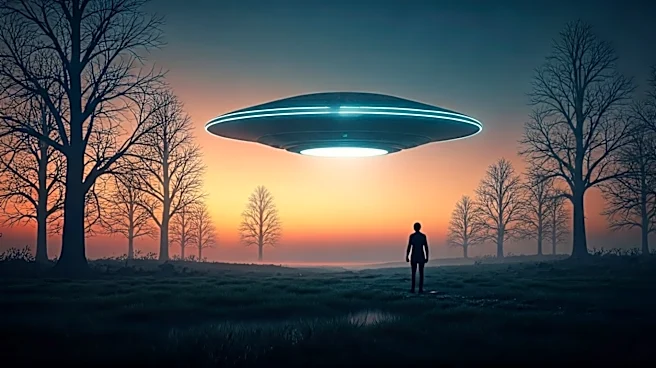
When you think of a Spielberg alien, you probably don’t picture a snarling, acid-drooling monster hell-bent on planetary destruction. Instead, your mind likely goes to the gentle, glowing fingers of E.T. or the awestruck face of Richard Dreyfuss in *Close
Encounters of the Third Kind*, staring up at a mothership that communicates through music. This is the director’s signature: he reframed contact with the unknown not as an immediate threat, but as a source of profound, almost spiritual awe. His UFO stories are fundamentally about humanity, seen through the eyes of ordinary people—suburban families, electrical linemen—thrust into extraordinary circumstances. The aliens aren't the point; our reaction to them is. They are a catalyst for wonder, forcing us to look up from our mundane lives and consider our place in the cosmos.
An Antidote to Modern Blockbusters
Today’s blockbuster landscape is dominated by spectacle for spectacle’s sake. Explosions are bigger, CGI is more seamless, and the stakes are perpetually world-ending. Yet, something often feels missing: a human-sized heart. Spielberg’s return to this genre feels like a course correction. His best work reminds us that special effects are a tool to serve a story, not the story itself. While he can certainly deliver action—*War of the Worlds* remains a terrifyingly effective thriller—his most beloved alien films prioritize emotion over destruction. A new, original UFO film from him promises a story driven by character and mystery, a welcome alternative to the pre-packaged, committee-driven tentpoles that can feel more like content than cinema. It’s the difference between a four-course meal and an all-you-can-eat buffet; one is crafted, the other is just about volume.
It’s All About Connection
At their core, Spielberg’s UFO films are about the desperate, beautiful, and often clumsy attempt to communicate. In *Close Encounters*, it’s done through math and music, a universal language that bridges the cosmic gap. In *E.T.*, it’s a psychic and emotional bond between a lonely boy and a lost creature. Even in the grim context of *War of the Worlds*, the entire narrative is anchored to a father’s primal drive to protect and reconnect with his children amidst chaos. This theme of connection is the secret ingredient in the comfort food. In a deeply divided world, a story that champions empathy and understanding—even with a being from another world—feels more resonant than ever. It suggests that our better angels can prevail, that curiosity can triumph over fear, and that we are not, in the end, alone.
The Power of Pure Nostalgia
Let’s be honest: a huge part of the appeal is pure, uncut nostalgia. For millions of moviegoers, *E.T.* wasn't just a film; it was a formative childhood event. It’s a film synonymous with suburban magic, Reese’s Pieces, and the overwhelming feeling of saying goodbye to a friend. Similarly, *Close Encounters* defined the modern UFO myth for a generation. Spielberg returning to this thematic playground is like hearing your favorite band is getting back together to play the hits, but also with a new song. It taps into a powerful emotional memory, promising to rekindle that original feeling of cinematic magic we felt as kids, sitting in a dark theater and believing that something incredible was about to happen. It's a return to a safe, imaginative space he created for us decades ago.