






The Philosophy of Tangible Reality
Christopher Nolan doesn’t just prefer practical effects; he believes in an absolute difference between photography and animation. For him, a special effect should be seamless, not a showcase of how much money was spent. It’s a philosophy of tangible reality.
When Batman’s semi-truck flips over in The Dark Knight, it flips for real on a Chicago street, the result of a massive piston and a TNT charge. The audience feels the physics because they are real. When Joseph Gordon-Levitt fights in a spinning hallway in Inception, he’s actually inside a 100-foot rotating set, fighting against real gravitational forces. This commitment means his films have a fraction of the VFX shots of comparable blockbusters, but the ones he does use serve to enhance what was already captured in-camera. This is the core principle he would bring to mythic combat: ground the impossible in the physically plausible.
Grounding Gods Through Environmental Impact
The “weightless-CGI problem” often comes from a lack of believable interaction with the environment. A giant monster lands, but the ground doesn't deform correctly; two gods collide, but the shockwave feels like a digital ripple. Nolan’s method would be to focus obsessively on the consequences. Instead of showing two deities trading energy blasts in mid-air, he would show the street below buckling under their power. He would make the set a character in the fight. Think of the Paris street folding over on itself in Inception. Nolan’s direction to the sound team was to make it sound like “massive machinery, like a huge watch mechanism,” grounding an impossible image with a relatable, mechanical sound. For mythic combat, he would apply the same logic: every punch thrown by a god would have an equal and opposite reaction on the physical world, filmed with real materials breaking, shattering, and exploding. The weight of the characters would be measured by the destruction they cause to a real, physical space.
The Immersive Power of IMAX Perspective
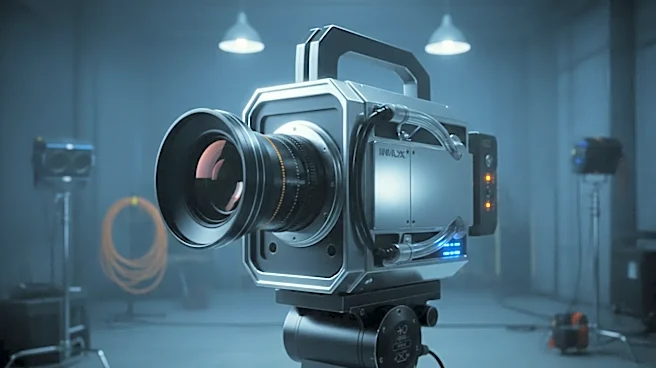
Nolan uses IMAX cameras not just for scale, but for perspective. Because the cameras are large, noisy, and lack zoom lenses, they force a deliberate and physical relationship with the action. He often puts the audience in the cockpit or over a character's shoulder, creating a visceral, first-person viewpoint. To solve the weightless combat problem, he would keep his IMAX camera at a human level. We wouldn’t get a floating, omniscient view of two giants fighting. Instead, we would experience the battle from the perspective of a terrified mortal on the ground, with behemoths shaking the earth around them. We'd see a god's fist impact a building from inside that building, with debris and dust captured on large-format film. This grounds the action in a relatable human experience. Even for his upcoming film The Odyssey, Nolan and IMAX developed new technology to muffle the camera's sound, allowing him to use the format for intimate dialogue scenes for the first time, proving his commitment to using the immersive format for character, not just spectacle.
Weaponizing Sound to Create Aural Weight
In a Nolan film, sound is a physical force. He is notorious for mixes where dialogue is intentionally buried under engine noise or a swelling score, using speech as just another sound effect to create a chaotic, immersive experience. He would apply this to mythic combat by creating a soundscape that gives the fighters aural weight. A punch wouldn’t just be a stock thwack; it would be a complex composition of tearing metal, deep frequencies that shake the theater, and the auditory illusion of a Shepard Tone to create ever-rising tension, a technique he used masterfully in Dunkirk. The roar of a mythical beast wouldn't be a clean digital scream; it would be a distorted, overwhelming wave of sound that feels genuinely threatening because it dominates the entire sonic landscape. By prioritizing the visceral feel of the sound over the clarity of every grunt and yell, he would make the combatants feel powerful and terrifying, solving the weightless problem through the audience's ears.