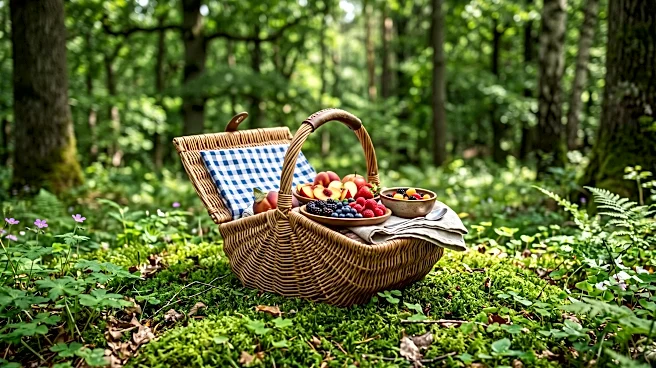






He’s smarter than the average bear, with an insatiable appetite for 'pic-a-nic' baskets. But Yogi Bear’s appeal goes beyond his petty larceny. It’s about gentle rebellion, the pursuit of simple joys, and a charming defiance of rigid rules.
I Vitelloni (1953) - The Art of Purposeful Loafing
Federico Fellini’s
'I Vitelloni' follows a group of aimless young men in a small Italian town, content to drift through life avoiding responsibility. Their existence, a cycle of minor schemes and leisurely pursuits, is a sophisticated, black-and-white reflection of Yogi and Boo-Boo's daily agenda. Where Yogi seeks a sandwich, the 'vitelloni' (or 'loafers') chase romance or a good time, but the spirit is the same: a resistance to the drudgery of adult life in favor of more immediate, if less productive, pleasures. It captures the core of Yogi's ethos—that a life dedicated to the simple, joyous present isn't a wasted life at all.
Mon Oncle (1958) - Man vs. The Modern World
Jacques Tati’s bumbling, trench-coated hero, Monsieur Hulot, is a near-perfect stand-in for Yogi Bear. In 'Mon Oncle', Hulot navigates the absurdly sterile and automated home of his sister, a world of buzzing gadgets and soulless design. Much like Jellystone Park is a structured system that Yogi constantly disrupts, the hyper-modern Villa Arpel is an environment Hulot unintentionally breaks with his simple, human clumsiness. He represents a warm, chaotic humanity at odds with cold, rigid systems—the exact same conflict that defines Yogi’s playful battles with the rule-obsessed Ranger Smith. It’s a gentle but firm argument that being 'smarter than the average bear' sometimes just means being more human.
Tampopo (1985) - The High-Stakes 'Pic-a-nic Basket'
At its heart, 'Tampopo' is about one woman's obsessive quest to create the perfect bowl of ramen. This Japanese 'ramen western' elevates Yogi’s singular focus on picnic baskets into a spiritual and artistic journey. The protagonist, Tampopo, aided by a band of dedicated food lovers, deconstructs and rebuilds her craft with a passion Yogi would surely understand. The film treats the pursuit of food not as mere gluttony, but as a noble, life-affirming goal that brings people together and gives life meaning. It is the most eloquent defense imaginable for why one might dedicate their entire existence to securing the next delicious meal.
Amélie (2001) - The Whimsical Rule-Bender
Yogi Bear isn't malicious; he just believes the rules can be bent for the sake of a little happiness. Amélie Poulain, the shy Parisian waitress at the center of this beloved film, operates on a similar principle. She secretly manipulates her environment and the lives of her neighbors, not for personal gain, but to orchestrate small moments of joy and justice. Like Yogi arranging an elaborate contraption to swipe a basket, Amélie engineers charmingly complex schemes to fix a broken world in her own small way. Her actions, while mischievous, are driven by a fundamental goodness and a desire to make the world a more magical place—a perfect parallel to Yogi's own brand of well-intentioned chaos.
The Intouchables (2011) - The Lovable Rogue and His uptight friend
The dynamic between Yogi and Boo-Boo—the optimistic, rule-breaking schemer and his cautious, loyal companion—is a cornerstone of the cartoon's charm. This relationship finds a powerful, human echo in 'The Intouchables'. The film tells the true story of the friendship between a wealthy quadriplegic, Philippe, and his ex-convict caregiver, Driss. Driss, with his irreverence and refusal to pity Philippe, shatters the rigid, somber rules of his employer’s life, introducing joy, spontaneity, and chaos. Driss is the irrepressible Yogi, while Philippe, initially bound by circumstance and convention, plays the role of the more grounded figure whose world is made bigger and better by his friend's disruptive energy. It’s a testament to the power of an unlikely friendship built on challenging the status quo.