



In fashion, the smallest details often make the biggest difference. On a minimal dress, a single curved seam running down the front might seem like a minor choice, but it's a powerful tool of design, shaping, and visual storytelling.
It's the Hidden Architect of Shape
The primary job of
any seam is to join pieces of fabric, but a curved center-front seam does much more than that. It’s a sophisticated alternative to traditional darts—those triangular folds of fabric used to create contours around the bust and waist. Instead of interrupting the fabric with a dart that points to the fullest part of the bust, a long, elegant princess seam or a strategically curved center seam builds that shaping directly into the garment's structure. This creates a cleaner, more fluid line that follows the natural curves of the body, providing a tailored fit without adding visual clutter. Think of it as sculpting with thread; the curve is precisely calculated to remove excess fabric where you don't need it and provide room where you do, resulting in a silhouette that skims the body gracefully.
A Master of Visual Illusion
Beyond its structural function, a center-front seam is a master of optical illusion. A strong vertical line naturally draws the eye up and down, which can create an impression of added height and a leaner silhouette. When that line is gently curved, it does something even more nuanced. It can soften the entire look while still providing that elongating effect. For designers, this seam is a deliberate choice to guide the viewer's gaze. By placing a continuous line at the very center of the body, it can make the torso appear narrower and more defined. This is especially true in a minimal dress where there are few other details competing for attention. The seam becomes the focal point, subtly manipulating proportion and enhancing the wearer's form through a simple, unbroken line.
A Mark of Intentional Design
Choosing a curved center-front seam over other construction methods is a mark of high-quality, intentional design. While a dress cut from a single piece of fabric in the front (known as being 'cut on the fold') can be efficient, introducing a center seam requires more precision in cutting and sewing. It signals that the designer prioritized fit and contour over simplicity in production. This technique allows for more precise adjustments during the tailoring process, as small changes can be made along the entire length of the seam. Furthermore, a center seam can be a design element in itself. It can be topstitched in a contrasting thread for emphasis or used to perfectly match a pattern for a seamless, high-end look. It tells you that the garment wasn't just made; it was engineered.
It Interacts with Fabric Beautifully
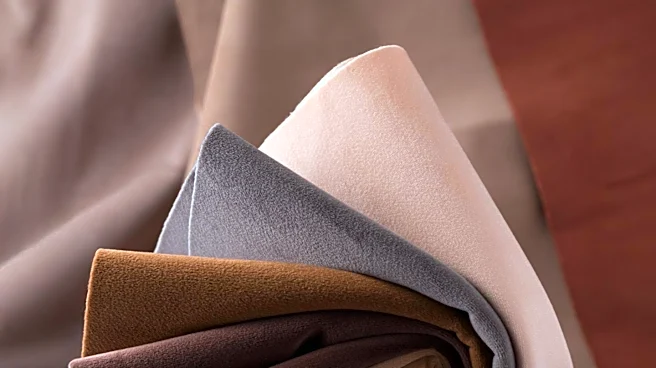
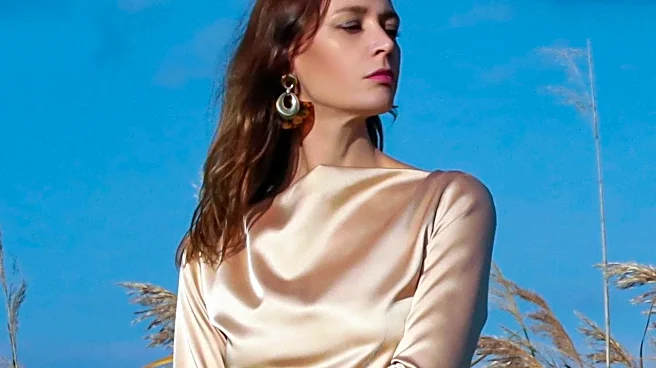
The effectiveness of a curved seam is deeply connected to the fabric of the dress. In a lightweight, fluid material like rayon or silk, the seam helps guide the drape, ensuring the fabric falls elegantly rather than clinging. In a more structured fabric like linen or a light wool crepe, the seam holds the intended shape, creating a smooth and defined silhouette without appearing rigid. Because a curved seam is cut along a bias or a shaped grainline, it has a different stretch and behavior than the rest of the fabric. A skilled designer uses this property to their advantage, creating a garment that moves with the wearer while maintaining its flattering shape. It’s this interplay between fabric and construction that elevates a simple dress into something truly special.