






No License, No Art Car
First things first: this isn't a vehicular free-for-all. Every single one of the spectacular machines you see roving the desert, from tiny roving armchairs to multi-story rolling nightclubs, must be licensed by Burning Man's own Department of Mutant Vehicles
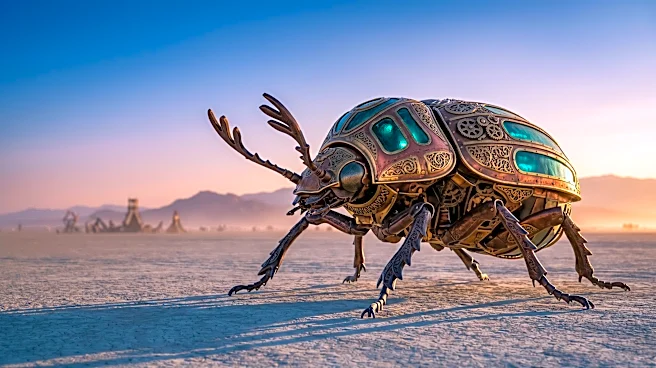
(DMV). This volunteer-run group is the event's official gatekeeper for mobile art. Before a wheel even touches the dust, vehicle creators submit detailed applications with designs and safety plans. On arrival, each vehicle undergoes a rigorous inspection. The DMV checks for crucial safety features like functional brakes, sturdy railings, the absence of sharp, protruding edges, and adherence to the strict 5 MPH speed limit. They also judge the 'mutation' level—if it still looks too much like a golf cart, it won't pass.
The All-Important Night Pass
Driving in the pitch-black desert night is a different challenge altogether. To earn a coveted night license, a mutant vehicle can't just have headlights; it needs what organizers call 'radical illumination'. This means the entire vehicle—front, back, sides, and any extremities—must be thoroughly lit to be visible from all angles. This serves a dual purpose: it prevents collisions by making the vehicle a beacon in the darkness and contributes to the surreal, glowing aesthetic of Black Rock City after sundown. A vehicle that is safe for day driving might not pass its night inspection, keeping it parked until sunrise.
The Driver Is Never Alone
Even with a license and lights, a driver's field of vision can be severely limited, especially from the cockpit of a giant dragon or inside a rolling seashell. This is where the 'choreography' truly begins. For most large vehicles, the driver is only one part of the equation. Safe operation is the responsibility of the entire crew, and many vehicles are required to have a team of ground guides, or 'spotters,' to move at all. These unsung heroes are the eyes and ears on the ground. They walk alongside the vehicle, often forming a perimeter, using flashlights and hand signals to clear a path and communicate with the driver. They are the critical link between the massive, slow-moving machine and the unpredictable flow of people around it.
A Dance With The Crowd
The final element in this complex dance is the crowd itself. Burning Man operates on a principle of 'radical self-reliance,' which extends to being aware of one's surroundings. Participants, often called 'burners,' generally know the rules: give mutant vehicles space, make eye contact with drivers and spotters, and never, ever jump onto a moving vehicle. The slow 5 MPH speed limit is key, as it allows pedestrians and cyclists time to react and move aside. When a driver signals a turn or a spotter waves their flashlight, the crowd understands and parts, creating a safe channel. It's a system built on mutual respect and a shared understanding that everyone is responsible for keeping the magic—and each other—safe. This cooperative spirit transforms what could be a chaotic and dangerous situation into a mesmerizing, slow-motion ballet.