





The Familiar Folk-Rock Dream
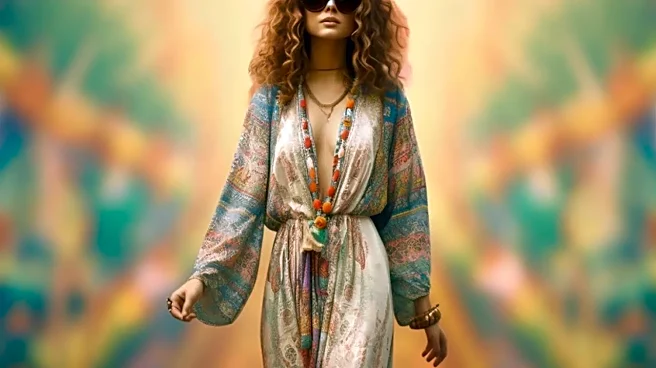
The aesthetic we now call '70s boho' was the organic evolution of the late-1960s hippie movement. Solidified as a mainstream force after Woodstock in 1969, it was a rebellion against the stiff, structured fashions of previous decades. It championed natural
fabrics like cotton and linen, handcrafted details like embroidery, and flowing silhouettes that suggested freedom and a rejection of conformity. Designers like London's Thea Porter and Ossie Clark were masters of this look, creating romantic, diaphanous dresses and blouses inspired by global textiles from the Middle East and Eastern Europe. Their work, worn by rock royalty like Stevie Nicks and Pink Floyd, defined an earthy, eclectic glamour rooted in personal expression and a back-to-nature ethos. This was fashion as a lifestyle statement: peaceful, authentic, and individualistic.
Challenger 1: The Sci-Fi Future
While hippies looked to the earth, another tribe was looking to the stars. The Space Age aesthetic, born in the '60s but still influential in the early '70s, offered a completely opposite vision. Designers like André Courrèges and Pierre Cardin championed a future of clean lines, geometric shapes, and synthetic materials like PVC and plastic. Their work was minimalist, architectural, and optimistic about technological progress. Instead of flowy maxi dresses, they proposed A-line mini skirts, sharp cutouts, and vinyl go-go boots, often in a palette of stark white and silver. This was a sleek, forward-looking style for a modern woman, inspired by the moon landing and a belief in a streamlined, utopian tomorrow. It was structured, artificial, and coolly futuristic—the absolute antithesis of bohemian warmth.
Challenger 2: The Glam Rock Rebellion
If boho was about peace and love, glam rock was about performance and provocation. Kicking off in Britain, this movement treated fashion as theatrical costume. Artists like David Bowie and Marc Bolan rejected the earthy naturalism of the hippies, instead embracing glitter, satin, platform boots, and androgyny. This was a loud, hedonistic, and deliberately artificial style. It was about challenging gender norms and celebrating a shocking, over-the-top glamour. While bohemian style was about finding your authentic self, glam was about inventing a new one, complete with face paint and feather boas. It was a peacock-like display that was far more interested in spectacle and sexual fluidity than in folk-inspired authenticity.
Challenger 3: The Sleek American Minimalist
Across the Atlantic, a different kind of modernism was taking hold. American designer Roy Halston, known simply as Halston, was defining a new kind of luxury that was neither folksy nor futuristic. His vision was one of minimalist, effortless elegance for the sophisticated urban woman. He was the king of the disco era, creating simple, body-skimming jersey dresses, flowing caftans, and perfectly tailored trousers in luxurious fabrics like Ultrasuede and silk. Halston stripped away unnecessary details—no fussy buttons, no complicated bows—focusing on the clean line and the way fabric moved with the body. His look was glamorous, comfortable, and quintessentially American, representing a polished, liberated woman who was at home in a penthouse apartment or at Studio 54. It was a powerful alternative to the handmade, layered look of the bohemians.
Why Bohemianism Won the Decade
So, with all these powerful competing visions, why does the free-spirited bohemian look remain the defining aesthetic of the 1970s? Part of the answer is accessibility. While Space Age futurism required new materials and glam rock demanded theatrical nerve, the core elements of boho—denim, cotton blouses, and vintage pieces—were affordable and adaptable. The style was rooted in a cultural movement that valued individuality and creativity, allowing people to assemble their own look from thrift stores and handmade items. Furthermore, the social and political climate was shifting. The optimism of the Space Age felt less relevant in a decade marked by economic recession and the end of the Vietnam War. The hippie ethos, with its emphasis on simplicity, nature, and anti-materialism, resonated more deeply with the post-60s mood, even as it was commercialized and absorbed into the mainstream. The other styles were powerful, but bohemianism was a broader, more democratic church that ultimately defined the era's spirit.