








The Anxiety Attack That Won a Comedy Award
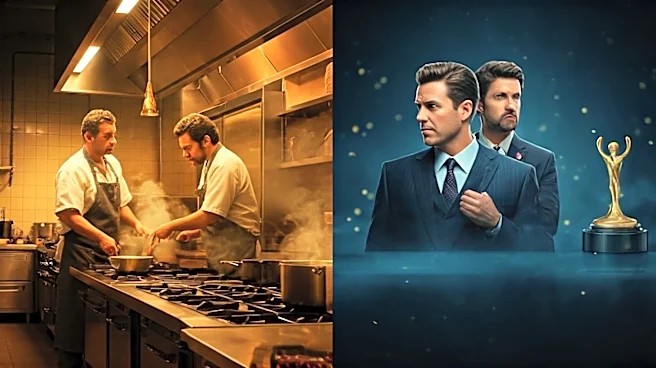
Anyone who has watched FX’s “The Bear” can attest to its visceral intensity. The series follows fine-dining chef Carmy Berzatto as he returns to Chicago to run his family's chaotic sandwich shop after his brother's suicide. It's a raw, often heart-wrenching
exploration of grief, ambition, and workplace pressure that feels more like a sustained panic attack than a laugh riot. Yet, in the world of television awards, this high-stress drama has been consistently and successfully categorized as a comedy. The show has collected a stunning number of Emmys and Golden Globes in comedy categories for its writing, directing, and acting. This has left many viewers scratching their heads, but for industry insiders, it represents a calculated and brilliant strategic maneuver.
It’s Not Funny, It’s Strategic
The decision to submit “The Bear” as a comedy wasn't based on its laugh-out-loud moments, but on cold, hard awards-season math. Historically, the Emmy Awards used a show's runtime to help define its category; half-hour shows were generally comedies, while hour-long shows were dramas. While the rules are now more focused on tone, the half-hour format of most of "The Bear's" episodes provided the initial justification. The real prize, however, was opportunity. The Outstanding Drama Series category is often a battlefield of titans—epic, expensive shows with massive ensemble casts. By entering the comedy race, FX gave "The Bear" a clearer path to victory, avoiding a direct showdown with other juggernauts. Rival networks even pushed for the Television Academy to move the show to the drama category, a testament to how effective the strategy was perceived to be. It’s a classic case of “category fraud,” a long-standing industry practice where a show is positioned in a less-crowded field to maximize its chances of winning.
The 'Dramedy' Gold Rush
The wild success of “The Bear” has not gone unnoticed. It has effectively created a new playbook for marketing and positioning the modern “dramedy”—shows that masterfully blend serious themes with comedic moments. Its awards-season dominance has emboldened other creators and networks to push the boundaries of genre classification. We are now seeing a wave of shows that live in this ambiguous space, and their marketing often emphasizes their prestige and dramatic weight, even while they might be campaigned as comedies. The strategy is twofold: attract audiences with compelling, high-stakes drama, and then chase industry accolades in a category that may offer a better shot at a win. “The Bear” proved that you don't need to market a show as a traditional comedy to win comedy awards; you just need to be exceptional and smart about the rules of the game.
What Even Is a Comedy Anymore?
Ultimately, the phenomenon of “The Bear” reflects a broader evolution in television. The lines between comedy and drama have been blurring for years, with shows like “Barry” and “Succession” delivering hilarious moments within deeply dramatic contexts. What “The Bear” did was crystallize this trend into a winning marketing formula. Its cast and creators have defended the comedy label, arguing that real life is a mix of the tragic and the absurd. This perspective resonates in an era where television is less about fitting into a neat box and more about reflecting a complex reality. The show's marketing can now sell its authentic, high-stakes kitchen drama to viewers while the awards campaign leverages the comedy label for gold. This has changed the conversation, forcing both audiences and the industry to ask a fundamental question: In an age of hybrid television, what does the word “comedy” even mean?