

A Conversation with Ghosts
At most awards shows, the “in memoriam” segment is a tasteful but often sterile affair—a montage of faces set to a somber ballad. At the Americana Honors & Awards, it’s a living, breathing conversation with ghosts. This year, the presence of those recently
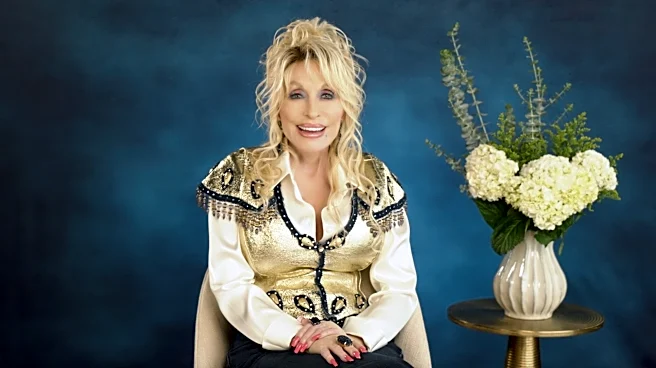
lost was palpable. When Brandi Carlile and I'm With Her performed a stunning version of "Coat of Many Colors," it was more than a cover; it was a channel to the spirit of Dolly Parton, who had passed away just weeks earlier. The performance followed a posthumous video message from Parton herself, turning what could have been a somber moment into a powerful, bittersweet communion. Similarly, when the original members of Tom Petty's Heartbreakers reunited with Chris Stapleton to tear through a three-song set, it wasn’t just a performance; it was a cathartic rock and roll exorcism, celebrating a 50-year legacy with defiant, hopeful noise. These aren't just covers; they are active remembrances.
The Genre's Founding Principle
Americana, by its very definition, is a genre built on lineage. It’s a rich tapestry woven from the threads of folk, country, blues, and rock and roll. Its artists are students of history, deeply reverent of the songwriters who laid the groundwork, from Woody Guthrie to The Band. In this context, a tribute isn't a special feature; it's a core function of the genre. It's the public expression of a private practice: learning the songs of your heroes, understanding their stories, and carrying them forward. When Hayes Carll and Elizabeth Cook performed a song by the late Todd Snider, whom Carll called “the mayor of East Nashville,” it was an act of succession, honoring a beloved local troubadour. The music is seen as a torch to be passed, and the awards ceremony is where that flame is exchanged in front of the whole family.
The Ryman's Sacred Ground
The setting itself is a key character. The Ryman Auditorium in Nashville, the “Mother Church of Country Music,” is hallowed ground. Its wooden pews and stained-glass windows create an atmosphere that feels more like a revival than a slick television production. Unlike sprawling arenas, the Ryman fosters intimacy. The crowd of around 2,000 is made up of artists, fans, and industry members who are often friends, collaborators, and disciples of one another. Jed Hilly, the Executive Director of the Americana Music Association, refers to it as a “community.” When Mike Campbell of The Heartbreakers choked back tears saying, “Tom, I miss rockin’ around with you,” he was speaking to a room full of people who understood that loss on a personal level. This shared intimacy transforms the audience from passive viewers into active participants in the mourning and celebration.
Where Imperfection Is the Point
In a world of perfectly choreographed, pitch-corrected awards show medleys, the Americana tributes stand out for their raw authenticity. A cracked voice, a missed cue, or a tearful pause isn't a mistake to be edited out—it’s the entire point. When Chris Stapleton was so “enthralled” that he missed the first line of “American Girl,” nobody cared; the raw emotion of the moment was what mattered. These performances are not about technical perfection. They are about channeling the spirit of a song and its creator, warts and all. The all-star finale honoring The Mavericks' Raul Malo with “Dance the Night Away” was a joyous, beautifully messy singalong. This embrace of imperfection is the very ethos of roots music. It’s a testament to the idea that true art is found not in flawlessness, but in the honest, unfiltered expression of human feeling.