


The Myth of Spontaneous Style
The flapper silhouette is so tied to the Roaring Twenties that it feels like it was born overnight, a direct rebellion against the rigid, S-curve corsets of the Victorian and Edwardian eras. And it was a rebellion. Women happily ditched the constricting
undergarments that had defined their shape for generations. This new look, known as the “la garçonne” or “boyish” style, favored a flat chest and a straight, tubular line from shoulder to hem. It was modern, freeing, and perfectly suited to dancing the Charleston. But while the attitude and the rising hemlines were pure 1920s, the foundational silhouette—a dress that fell straight from the shoulders without defining the waist—had been quietly bubbling up for years.
A Revolution Before the Roaring Twenties
The seeds of the flapper look were actually planted in the decade before the 1920s. The true revolutionary was a Parisian couturier named Paul Poiret. Around 1908, well before the world had heard of flappers, Poiret began designing dresses for an uncorseted figure. He was inspired not by the future, but by the past—specifically the Neoclassical period of the French Directoire and Empire eras of the late 18th and early 19th centuries. This was a time when women, inspired by Greco-Roman statues, wore high-waisted, columnar gowns that draped naturally over the body. Poiret revived this idea, freeing the female form from its corset cage and introducing a looser, more fluid silhouette that shocked the establishment but set the stage for everything to come.
From High-Waisted to No-Waisted
Poiret’s designs of the 1910s were a crucial stepping stone. He took the high, under-the-bust waistline of the original Empire style and began to experiment. He created chemise dresses and tunics that were essentially straight tubes of fabric, often richly embellished and influenced by global styles, like the Japanese kimono. These garments didn't rely on a corset for structure; they relied on the natural drape of the fabric. During World War I, as life became more practical, this simpler, looser style gained traction. Designers like Coco Chanel, who started her career in the mid-1910s, championed this comfortable, uncinched look, using practical fabrics like wool jersey. The transition was underway: the silhouette had been liberated; it just hadn't found its signature 1920s edge yet.
The Twenties Take the Baton
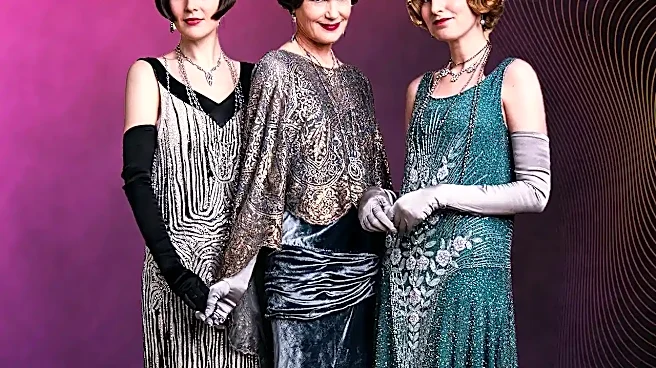
So, if the straight silhouette already existed, what made the 1920s version so iconic? The flappers took Poiret's liberated shape and ran with it, adapting it for a new, fast-paced, post-war world. They kept the tubular form but made two crucial changes. First, they dropped the waistline from just under the bust all the way down to the hips, creating the famous “dropped waist” that is the hallmark of the era. This visually elongated the torso and further minimized the bust and hips. Second, hemlines, which had been creeping up to the ankle in the 1910s, shot up to the knee and even higher by the mid-decade, a truly shocking development. Adorned with beading, fringe, and Art Deco patterns, the dress was no longer just a comfortable garment; it was a uniform for the newly liberated, modern woman.