







The Spielberg Vision: Aliens as Awe
Before grainy Navy footage and congressional hearings, there was the five-tone melody from *Close Encounters of the Third Kind* (1977). For a generation, Steven Spielberg defined our mainstream relationship with extraterrestrial life. His aliens weren't
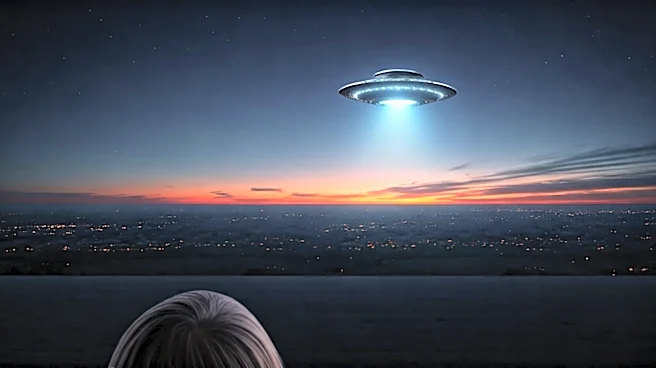
the marauding conquerors of 1950s B-movies; they were something far more profound. In *Close Encounters*, they were mysterious, almost divine beings who communicated through light and sound, inspiring obsession and wonder. Richard Dreyfuss’s Roy Neary didn't run from them—he ran *to* them. Five years later, *E.T. the Extra-Terrestrial* (1982) domesticated the concept, giving us an alien who was a lost, gentle child in need of protection. Spielberg’s vision was overwhelmingly optimistic. It suggested that contact wouldn’t be an invasion, but an awakening—a spiritual, emotional, or childlike connection that transcended human conflict. This shaped the public imagination for decades, creating a baseline of hopefulness that the modern conversation has complicated.
From 'UFOs' to 'UAPs': The Rebrand
While Spielberg was crafting stories of wonder, a parallel narrative of government conspiracy and cover-ups was bubbling in the real world. This story began in earnest on June 24, 1947, when pilot Kenneth Arnold reported seeing nine shiny, crescent-shaped objects flying at high speed near Mount Rainier. A journalist coined the term “flying saucers,” and a cultural obsession was born. Soon after, the infamous Roswell incident fueled beliefs that the government wasn't just observing these objects—it was hiding crashed ones. For decades, UFOs were relegated to the fringe. But recently, something changed. The conversation went mainstream, thanks in large part to a strategic rebranding. Officials and serious investigators dropped the term “UFO” (Unidentified Flying Object) in favor of “UAP” (Unidentified Anomalous Phenomena). This wasn't just semantics; it was a way to destigmatize the topic, allowing military pilots, intelligence officers, and politicians to discuss it without sounding like they were wearing tinfoil hats. UAP is a clinical, bureaucratic term for things in the sky (or water) that we can’t explain, making it a national security issue rather than a sci-fi fantasy.
What Is 'Disclosure Day' Anyway?
This brings us to “Disclosure,” a term with a capital D in the enthusiast community. “Disclosure” is the long-awaited moment when the world’s governments, particularly the U.S., finally admit what they allegedly know: that extraterrestrials are real, they are here, and there’s evidence to prove it. For believers, this isn’t a matter of if, but when. “World UFO Day” is celebrated by some on July 2 (to commemorate the Roswell incident) and by others on June 24 (to mark the Kenneth Arnold sighting). This latter date is what many now call “Disclosure Day,” an anniversary that doubles as a call to action for government transparency. It’s the central hope of a movement that believes the truth is being actively suppressed. This is the core tension: while Spielberg’s characters looked to the skies with hope, Disclosure advocates look to Washington with suspicion.
The Government’s Big Shrug
So, has Disclosure happened? Not even close. In 2021, the Office of the Director of National Intelligence released a landmark report on UAPs. It was a bombshell, but not in the way enthusiasts hoped. The government officially admitted that its own pilots had witnessed dozens of phenomena it could not explain. These objects demonstrated advanced aerodynamics, moving in ways that seemed to defy known technology. However, the report’s conclusion was essentially a giant, official shrug. It offered several potential explanations, from airborne clutter (like weather balloons) to secret U.S. or foreign adversary tech. The 'extraterrestrial' explanation was relegated to a catch-all 'other' category. In subsequent hearings, officials have doubled down on this position: the phenomena are real and a potential security threat, but we don't know what they are. This is the frustrating reality of modern disclosure—it's not a grand reveal, but a slow, bureaucratic process of admitting ignorance.