



From the Alps to the Abbey
The story begins, as the name suggests, in the monasteries of Europe during the Middle Ages. While the exact date is lost to history, the design's origin is a tale of practicality. Monks performing manual labor in the rugged, uneven terrain of the Alps
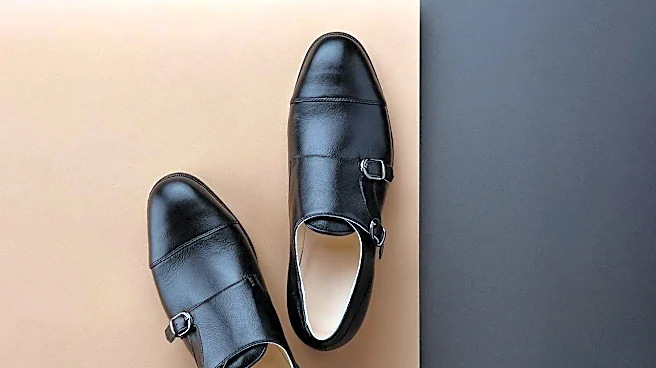
needed something more protective than the open-toed sandals they traditionally wore. Their solution was to create a closed-toe version of their sandals, crafting a durable leather shoe that covered the foot and was secured with a simple but effective buckle and strap. This offered better protection and a more secure fit than sandals, and was easier to take on and off than laced footwear, fitting the rhythms of a life balanced between prayer and work.
Entering the World of Style
For centuries, this functional design remained largely within monastic circles. It wasn't until the early 20th century that the monk strap began its transition into civilian fashion. Gaining popularity in England in the 1920s and 30s, it was seen as a stylishly practical alternative to the era's more rigid footwear. This was a generation of men returning from war, seeking clothing that felt modern and relaxed. The monk strap fit perfectly, occupying a unique space: more polished than a Derby but less stuffy than a formal Oxford. Initially, the single-strap version was the standard, offering a clean, minimalist look. It was a shoe for the style-conscious gentleman, but its biggest evolution was yet to come.
The Double-Strap Revolution
The shoe we most recognize today, the double monk strap, emerged as a continental European refinement. While English shoemaker Edward Green was vital in reinvigorating the style in the late 19th century, the double strap gained favor with Italian and Austrian tailors who appreciated its bolder look. The addition of a second buckle did more than just add visual interest; it paradoxically increased the shoe's versatility. While a single monk reads as more formal and closer to an Oxford, the double monk can be dressed up with a suit or dressed down with chinos and even denim. It became a statement piece, a shoe that signaled confidence and a certain sartorial flair. It wasn't just functional; it was expressive.
The Modern Symbol of 'Sprezzatura'
After a dip in popularity mid_century, the monk strap came roaring back, especially in the 2000s, becoming a hallmark of the fashion_forward man. Its resurgence is often credited to style icons like Italian boutique owner Lino Ieluzzi, who became famous for wearing his double monks, often with the top buckle undone—a move symbolizing 'sprezzatura,' or a studied nonchalance. This act turned the shoe from a classic into an icon of personal style. Today, designers from Alexander McQueen to Prada have embraced the design, creating versions with one, two, or even three straps. It has cemented its place as the choice for the man who understands the rules of classic style but isn't afraid to bend them.