
The Non-Stop Wall of Sound
In baseball, sound is strategic. There’s the murmur of the crowd between pitches, the focused silence during a wind-up, the eruption after a home run, and the organist filling the quiet moments. At the World
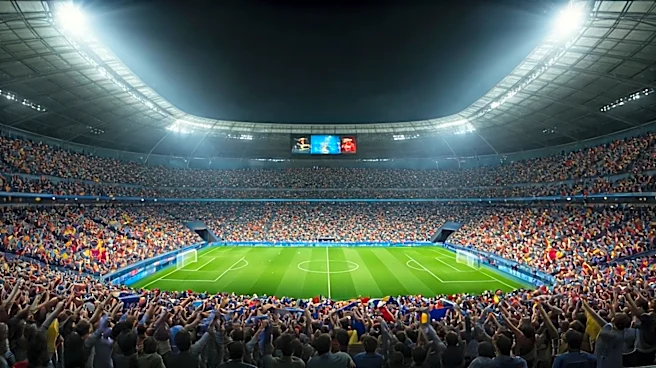
Cup, there are no quiet moments. From the first whistle to the last, and often for an hour before and after, entire sections of the stadium are engaged in coordinated, non-stop singing, chanting, and drumming. These aren't simple 'Let's go [Team]!' refrains. They are complex songs with multiple verses, often led by a 'capo' with a megaphone, whose sole job is to conduct the orchestral chaos. For an MLB fan, the closest equivalent might be a rowdy college student section, but imagine that multiplied by 20,000 and sustained for two hours straight without a hot dog break.
Art Projects the Size of a Building
A clever, hand-painted sign at a baseball game might get you a few seconds on the jumbotron. In global soccer, fans think bigger. Much bigger. Meet the 'tifo,' a term for large-scale, coordinated visual displays unfurled across entire fan sections just before kickoff. These are meticulously planned works of art, sometimes involving thousands of fans holding up colored cards to form a mosaic, or massive, painted banners that are passed over the heads of the crowd. They often depict club legends, historical victories, or taunts aimed at rivals. It’s a collective statement of identity and passion that makes even the most creative 'Yankees Suck' sign look like a child’s doodle.
The Uniform Is Not Optional
Sure, baseball fans love their jerseys and caps. It’s common to see a sea of home-team colors at any MLB game. But in World Cup culture, team attire is less a fashion choice and more a declaration of allegiance. Fans don 'kits' (the full uniform of jersey and sometimes shorts), but the real signifier is the scarf. Even in scorching summer heat, thousands of fans will hold their national scarves aloft, creating a vibrant tapestry of color while singing their country's anthem or most cherished fan song. It’s an essential piece of equipment for expressing both joy (twirling it wildly) and unity (holding it high and still).
The Pregame Is a Procession, Not a Tailgate
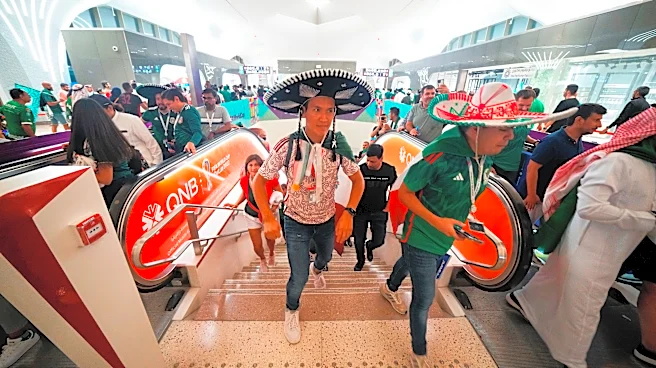
While American sports have perfected the art of the tailgate—a stationary festival of grilling, cornhole, and cold beverages in a parking lot—the World Cup equivalent is often a mobile affair. It's common for thousands of fans, especially the organized 'supporter groups,' to gather in a city square or pub hours before the match and then march to the stadium together. This isn't just a walk; it's a parade of flags, smoke bombs (in vibrant, team colors), and full-throated chanting that takes over the streets. It's a way of announcing their arrival and claiming the territory, turning the journey to the game into part of the spectacle itself.
Ninety Minutes of Unbroken Tension
A baseball game is a long, pastoral afternoon. There are inning breaks, pitching changes, and leisurely strolls to the concession stand. You can check your phone, chat with your neighbor, and still not miss much. A soccer match offers no such luxury. The clock runs continuously for two 45-minute halves with only a brief halftime in between. There are no commercial breaks. This relentless pace creates a palpable, shared tension in the crowd. Every moment feels critical because a single goal can decide everything. The emotional investment is constant and exhausting. You don't just watch a World Cup match; you endure it, living and dying with every pass, tackle, and shot for 90-plus uninterrupted minutes.